Mahāmeghavāhana Dynasty Rules Kaliṅga
Mahāmeghavāhana · महामेघवाहन
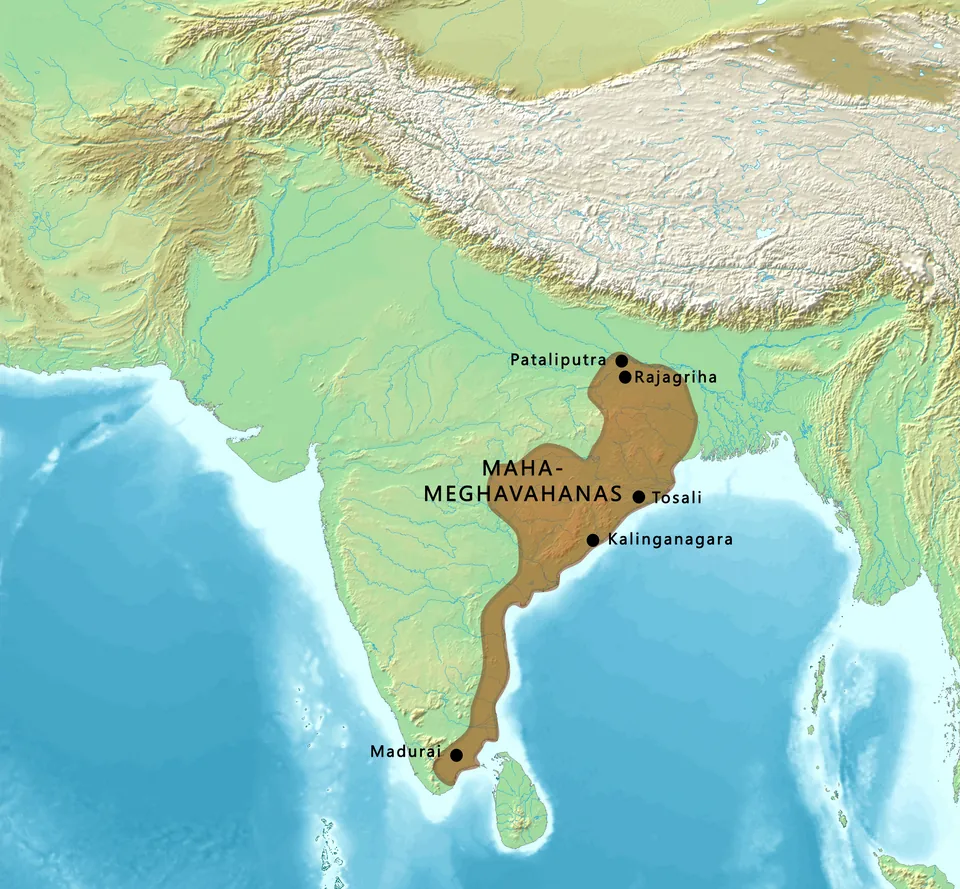
The Mahāmeghavāhana dynasty ruled Kaliṅga after the Maurya decline, from the second or first century BCE into the early fourth century CE. Its third king, Khāravela, who is known from the Hāthīgumphā inscription, patronised Jainism and made South Kosala part of his kingdom.
The Mahāmeghavāhana dynasty was a ruling house of ancient Kaliṅga that came to power after the decline of the Maurya empire. Its rule is dated from the second or first century BCE to the early fourth century CE. In the first century BCE the dynasty conquered Kaliṅga and Kosala. Its third king was Khāravela, who is best known from the Hāthīgumphā inscription near Bhubaneswar, and under his rule South Kosala was fully absorbed into the realm. Khāravela was a Jain patron who nonetheless treated other faiths fairly. Later, in the early second century CE, Gautamīputra Sātakarṇi of the Sātavāhana dynasty conquered South Kosala, which stayed in Sātavāhana hands until the second half of that century. In the second and third centuries the Meghas, or Meghavāhanas, returned to the political scene and regained overlordship in South Kosala. Samudragupta, on his southern expedition, defeated Mahendra of Dakṣiṇa Kosala, who may have belonged to this dynasty, though this is speculation. By the fourth century, South Kosala had become part of the Gupta empire. The start year is a rounded estimate for the dynasty's beginning.
Sources
- Mahameghavahana dynasty Wikipedia · CC-BY-SA-4.0
- Q6733051 Wikidata · CC0-1.0