Mauryan Art Moves from Wood to Stone
Under the Maurya Empire, between 322 and 185 BCE, royal patronage, above all by Aśoka, shifted Indian art from wood to stone. Surviving works include the polished pillars with animal capitals, stūpas, the Barabar rock-cut caves, and the elephant carved at Dhauli.
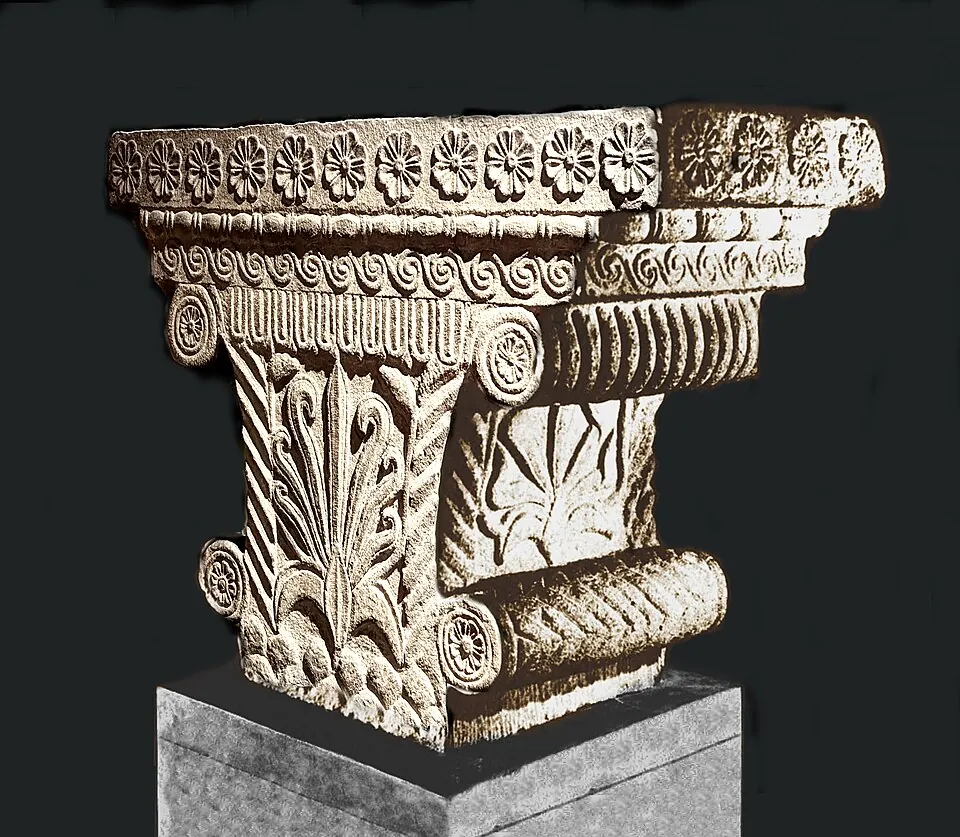
Mauryan art is the work produced while the Maurya Empire ruled most of the subcontinent, from 322 to 185 BCE. It was a court art, supported by the emperors and above all by Aśoka, and it marks a major change in Indian practice, from building in wood to carving stone. The principal survivors are pillars, stūpas and caves. They include remains of the palace and city of Pāṭaliputra, a monolithic railing at Sārnāth, the altar called the Bodhimaṇḍa at Bodh Gayā, and the Barabar caves near Gayā, where the Sudāmā cave carries an inscription of Aśoka's twelfth regnal year. Both plain and edict-bearing pillars survive, topped by animal capitals with floral and animal reliefs on their abaci, and the front of an elephant is cut from living rock at Dhauli. Ananda Coomaraswamy proposed in 1923 that Mauryan art had three phases, though some works once linked to it, such as the Bhāja cave reliefs, are now usually placed in the second or first century BCE.
Sources
- Mauryan art Wikipedia · CC-BY-SA-4.0
- Q6793993 Wikidata · CC0-1.0