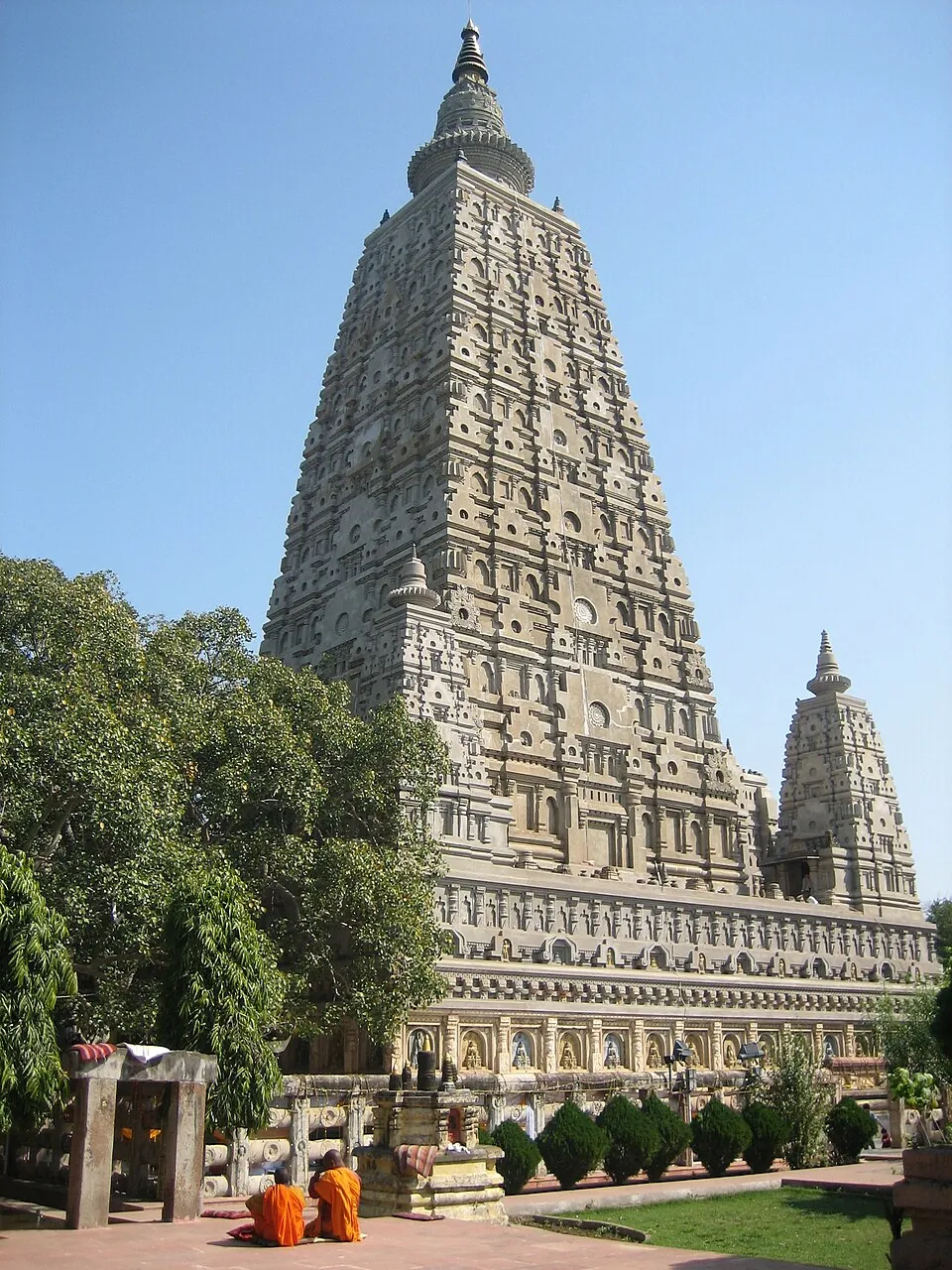
Mahābodhi Temple at Bodh Gayā
Mahābodhi Mahāvihāra · महाबोधि महाविहार
The Mahābodhi Temple at Bodh Gayā in Bihar marks where the Buddha is believed to have attained enlightenment. The Vajrāsana there is dated to the third century BCE, in Mauryan times, while the tall structure seen today largely reflects rebuilding from about the sixth century CE and later restorations.
The Mahābodhi Mahāvihāra at Bodh Gayā in Bihar is a restored Buddhist temple at the place where, according to Buddhist belief, the Buddha attained enlightenment. It is a UNESCO World Heritage Site and the holiest destination for Buddhists, who have come on pilgrimage for more than two thousand years. A tree on the grounds is held to descend from the original Bodhi Tree. Archaeological finds show the place was venerated by the Mauryan period, and some elements go back to Aśoka's time, he having died around 232 BCE; the Vajrāsana, a stone seat within the shrine, belongs to the third century BCE. The standing building, however, mainly belongs to the sixth century CE or perhaps earlier, and it may include earlier work from the second or third century CE. Major restorations were carried out from the nineteenth century onward. Many of the oldest carvings now rest in the museum beside the temple, and the stone railing around the shrine has been replaced with copies. The date here marks the Mauryan founding phase.
Sources
- Mahabodhi Temple Wikipedia · CC-BY-SA-4.0
- Q4513 Wikidata · CC0-1.0