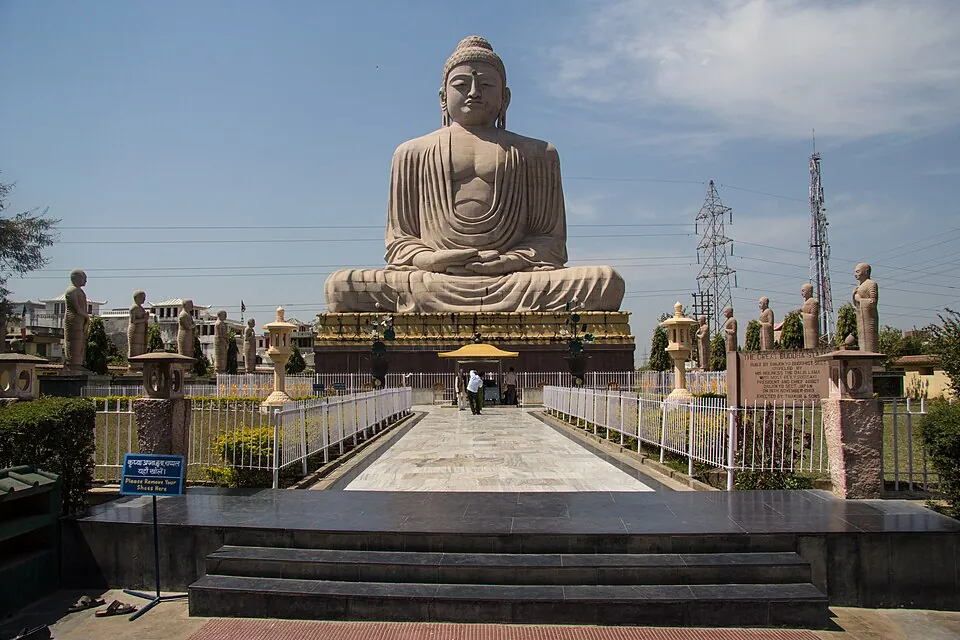
Bodh Gayā Grows into the Great Buddhist Pilgrimage Site
Bodh Gayā in Bihar is the place where the Buddha is said to have attained enlightenment under the Bodhi tree. Used by Buddhists since Mauryan times, it became the foremost of the four great pilgrimage sites, with the brick Mahabodhi temple in place by about the sixth century.
Bodh Gayā, in the Gaya district of Bihar, is revered as the spot of Gautama Buddha's awakening under the Bodhi tree. Sculpture and other finds show that Buddhists were using the site from Mauryan times, and pilgrims have come ever since. Among the four principal places connected with the Buddha's life, alongside Lumbini, Sarnath and Kushinagar, it holds the first rank for many devotees. The great brick temple known as the Mahabodhi, rising beside the tree, is usually dated to the Gupta age, roughly the fifth to sixth century, and so the date given here marks that phase of monumental building, not the first use of the place. Over the centuries the site drew visitors from across Asia, and Hindu religious communities later established a monastic presence nearby. The complex was inscribed as a UNESCO World Heritage Site in 2002. Control of the temple has been a subject of debate between Buddhist and Hindu custodians in modern times.