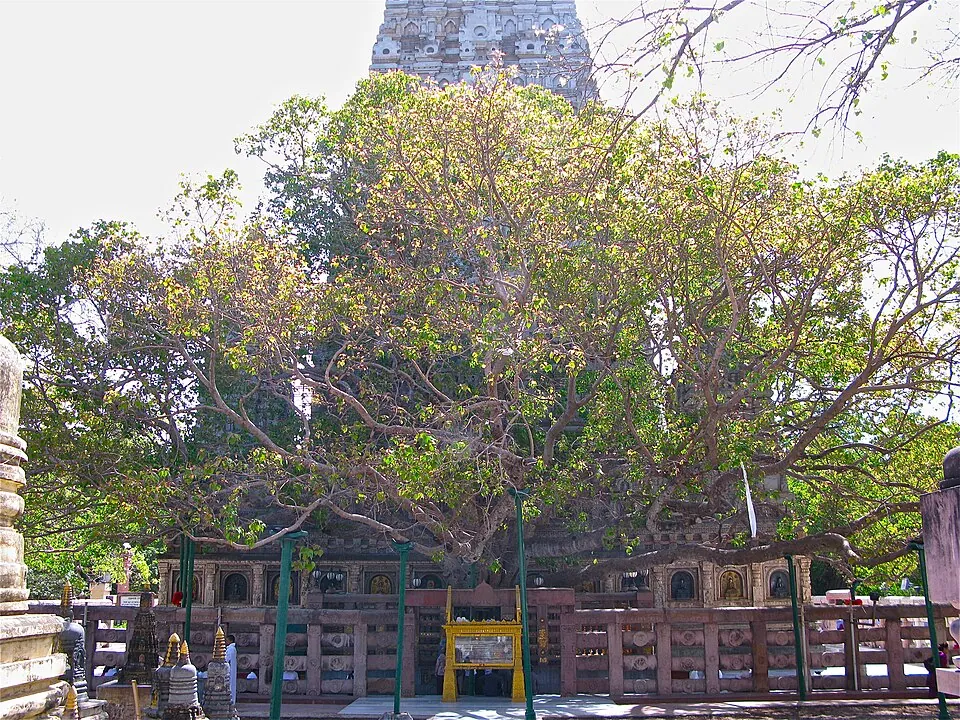
The Bodhi Tree at Bodh Gayā
Bodhivṛkṣa · बोधिवृक्ष
Buddhist tradition holds that Siddhārtha Gautama attained awakening beneath a sacred fig at Bodh Gayā in Bihar, around the fifth century BCE. The tree standing within the Mahābodhi Temple complex today is venerated as the continuing Bodhi tree. It is a key pilgrimage focus.
The Bodhi tree is a Ficus religiosa, the sacred fig, rooted within the Mahābodhi Temple precinct at Bodh Gayā in Bihar, a World Heritage Site. According to Buddhist tradition, Siddhārtha Gautama sat beneath such a tree at this place and attained enlightenment, becoming the Buddha, in about the fifth century BCE. The word bodhi means awakening. Over the centuries the tree has been honoured by pilgrims from across Asia, and cuttings from it have been carried to other lands; the famous tree at Anurādhapura in Sri Lanka is traditionally said to descend from a sapling sent there in the Mauryan period. Artists regularly show the tree with its heart-shaped leaves as a symbol of the Buddha's presence in early scenes where he is not portrayed in human form. The plant standing today is a later successor of the original, the older trees having died or been destroyed at various points, so devotion attaches to the continuity of the site rather than to a single trunk. The year used here marks the traditional moment of awakening, which rests on religious tradition more than on external records.
Sources
- Bodhi tree Wikipedia · CC-BY-SA-4.0
- Q321437 Wikidata · CC0-1.0