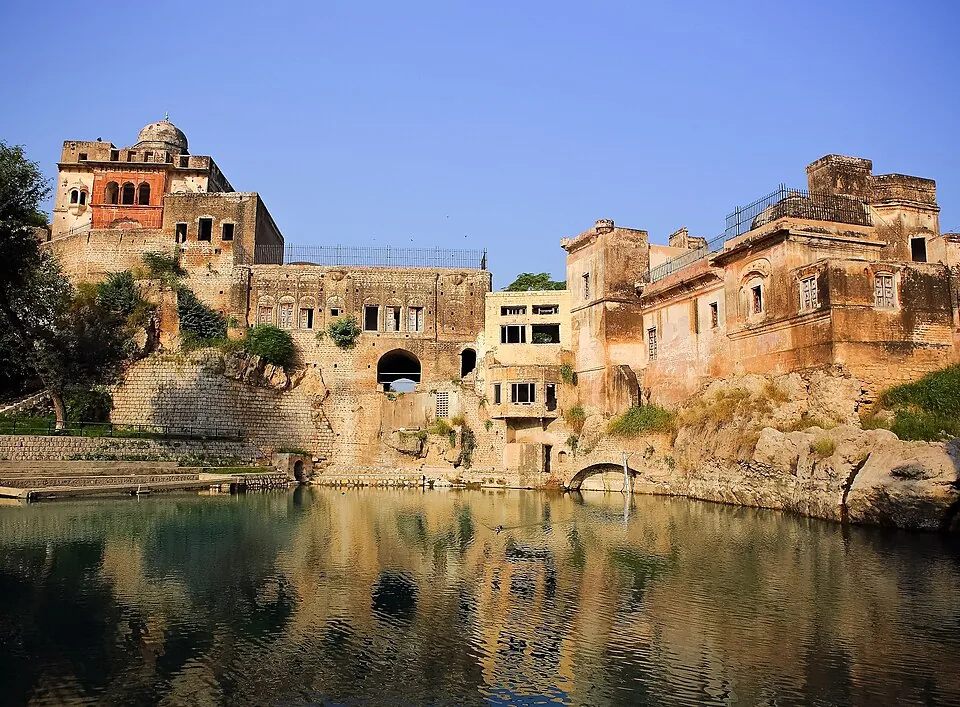
Katās Rāj Temples, a Sacred Pool in the Salt Range
Katās Rāj · कटास राज
The Katās Rāj temples are a Hindu temple group in Pakistan's Punjab, set in the Salt Range and arranged around a pond held sacred by Hindus. The oldest temple goes back to the sixth century CE, and the site is linked in belief with episodes in the Mahābhārata and the Purāṇas.
Katās Rāj is a cluster of Hindu shrines set in the Salt Range hills of Pakistan's Punjab. The main complex is joined by walkways and surrounds the Katās pond, which Hindus regard as sacred and which tradition connects with the tears of Śiva after the death of Satī. A second group of shrines, called the Sātghara, lies some distance to the south-west. The oldest temple at the site dates to the sixth century CE, and the complex developed over many centuries, with later additions from the Hindu Śāhi period onwards and further building in the Sikh era. The place is believed to figure in sacred narratives such as the Mahābhārata, where the Pāṇḍavas are said to have spent part of their exile nearby, and in the Purāṇas. For centuries it drew pilgrims from across northern India, and in the eleventh century the scholar al-Bīrūnī visited it. After partition the buildings suffered neglect, and conservation work has since been undertaken. The date given is the approximate age of the earliest temple, not an exact foundation record.
Sources
- Katas Raj Temples Wikipedia · CC-BY-SA-4.0
- Q3629175 Wikidata · CC0-1.0