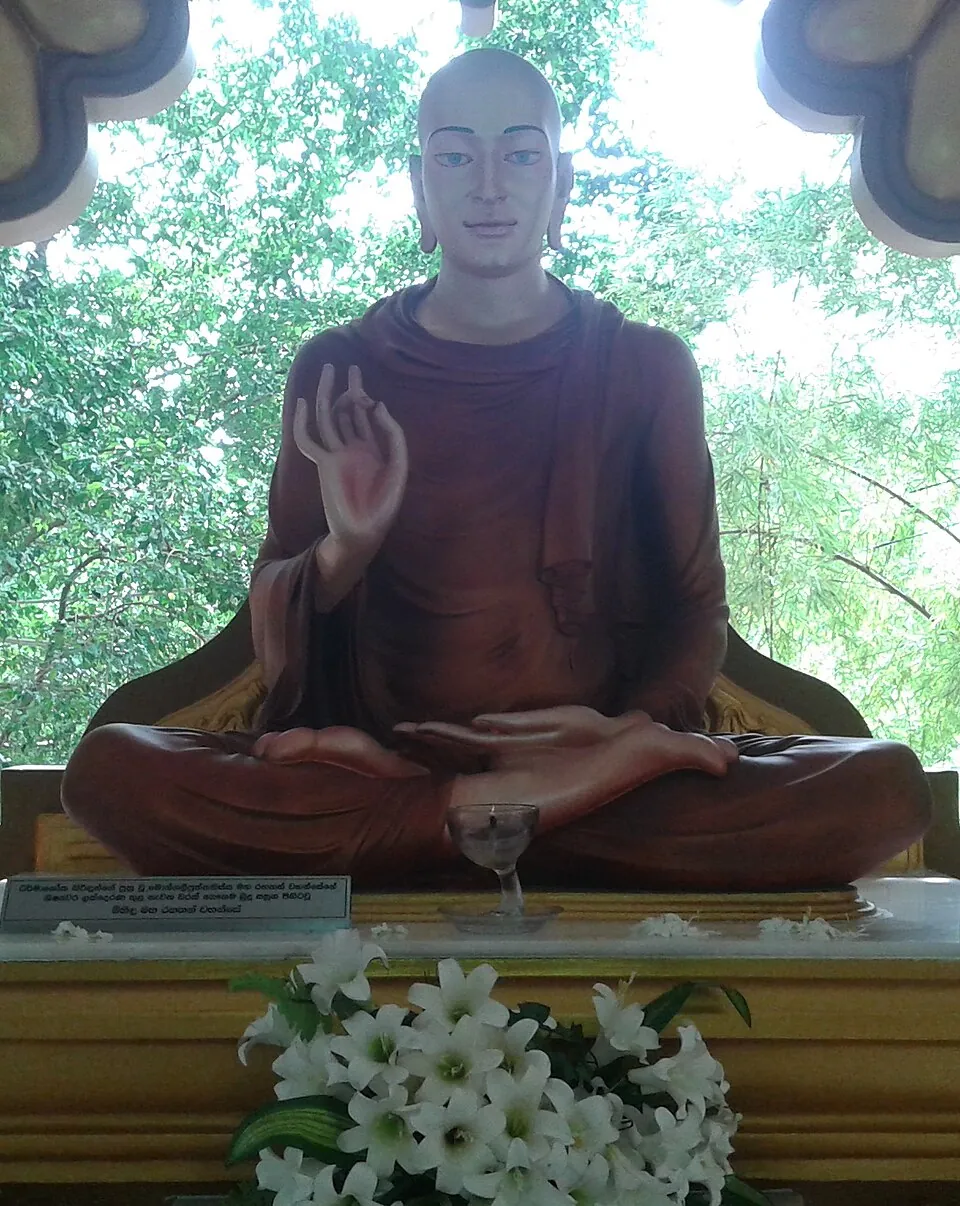
Mahinda Carries Buddhism to Sri Lanka
Mahinda · महेन्द्र
Mahinda, a Buddhist monk remembered in Sri Lankan tradition as a son of Emperor Aśoka, was sent as a missionary to the Anurādhapura kingdom around the mid-third century BCE. He settled at Mihintale and is credited with establishing Buddhism on the island.
Mahinda lived roughly from 285 to 204 BCE and is remembered as a monk who brought Buddhism to Sri Lanka. Sri Lankan tradition holds that he was a Mauryan prince, the first-born son of Emperor Aśoka and Queen Devī, and elder brother of Saṅghamittā, who is also credited with a role in the mission. Buddhist sources describe him being sent to the Anurādhapura kingdom, where the ruler Devānaṃpiya Tissa received him. Mahinda is said to have reached arhatship, the state of a fully liberated disciple, and he made his home at Mihintale, a hill sanctuary near Anurādhapura that remains a pilgrimage site. The monastic community he founded became the root of the island's Theravāda tradition, which later spread to mainland Southeast Asia. His mission is part of the wider story of Aśoka's outreach, in which Buddhist teachers travelled well beyond the Gangetic plain. The date given is an approximate mid-third-century placement, drawn largely from chronicle tradition, so details about his family and the year of arrival rest on later Buddhist sources.
Sources
- Mahinda (Buddhist monk) Wikipedia · CC-BY-SA-4.0
- Q587284 Wikidata · CC0-1.0