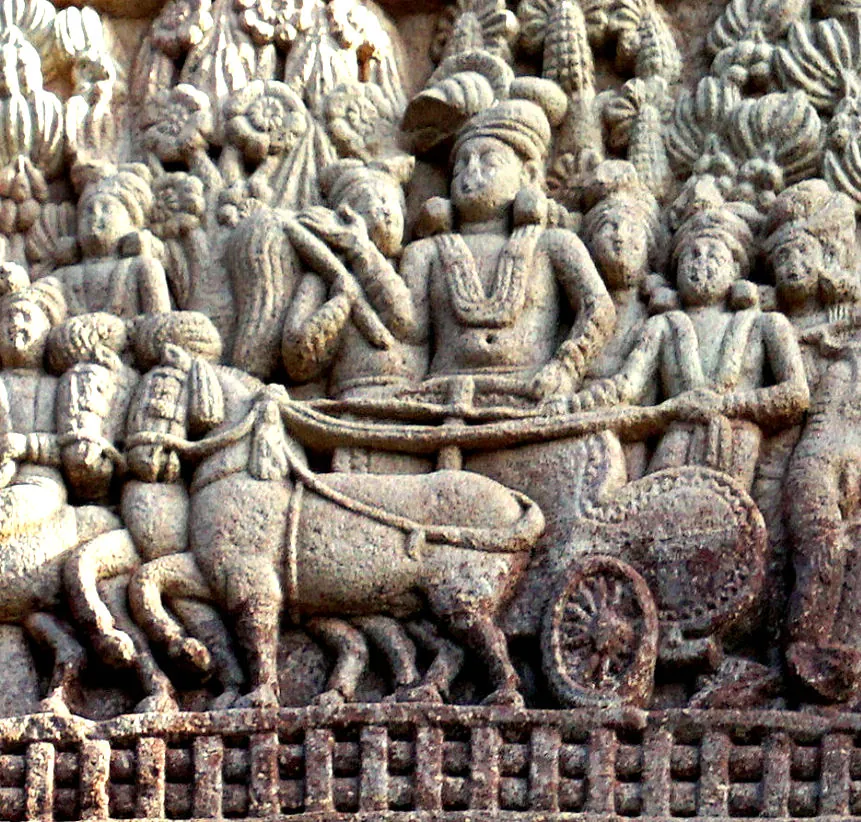
Aśoka Rules the Maurya Empire and Turns to Dhamma
Aśoka · अशोक
Aśoka, third Maurya emperor, ruled from Pāṭaliputra from about 268 BCE over most of the subcontinent. After the Kaliṅga war he promoted dhamma, righteous conduct, in his edicts and became a major patron of Buddhism. His lion capital and wheel are national symbols of India.
Aśoka became emperor of Magadha around 268 BCE and was the third ruler of the Maurya dynasty. His domain stretched from what is now Afghanistan to Bangladesh, governed from the capital Pāṭaliputra. His own edicts record that in his eighth regnal year, about 260 BCE, he took Kaliṅga in a savage war of conquest. He then devoted himself to the propagation of dhamma, a code of ethical conduct that is the main theme of the inscriptions, and the edicts suggest that a few years later he was drawn gradually to Buddhism. Buddhist legend credits him with building numerous stūpas, patronising the Third Council, supporting missionaries and giving generously to the saṅgha. His historical existence was almost forgotten until the nineteenth-century decipherment of Brāhmī revealed his inscriptions, and since then he has been counted among India's greatest rulers. The Lion Capital of Aśoka was adapted as the State Emblem of the Republic of India, and the Aśoka Chakra stands at the centre of the national flag. He is traditionally thought to have died around 232 BCE.