Pṛthu, the First Consecrated King in the Purāṇas
Pṛthu · पृथु
Placed by Puranic cosmic reckoning of the first kings; a symbolic position, not a calendar date.
In Puranic tradition Pṛthu, son of Vena, is remembered as the first consecrated king, the ruler from whom the Earth takes her name Pṛthvī. The Mahābhārata and the Viṣṇu and Bhāgavata Purāṇas describe him as a partial manifestation of Viṣṇu. His era is a matter of sacred reckoning, not historical dating.
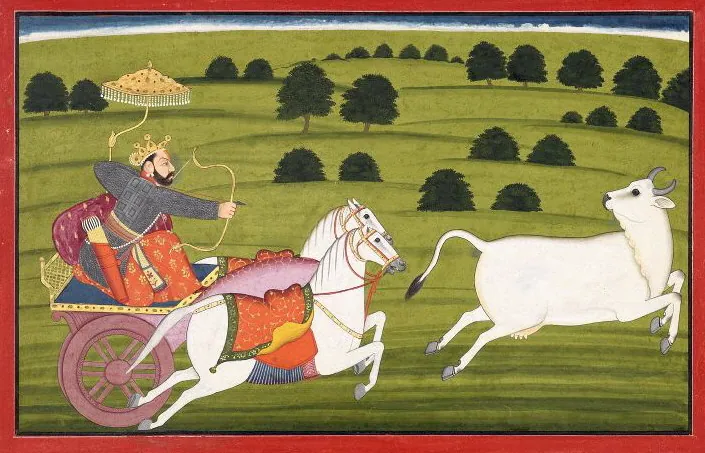
Pṛthu is a sovereign figure who appears in the Purāṇas and the Mahābhārata. Tradition calls him the son of Vena and treats him as the first king to receive a formal consecration, which is why the Earth is called Pṛthvī, 'the daughter of Pṛthu'. His best-known story tells how the goddess Earth, assuming the form of a cow, ran from him; when he pursued her she relented and let him draw from her the grain and plants that sustain living beings. Narrators use the episode to explain agriculture, settled life and the duty of a king to protect and nourish his subjects. The Viṣṇu Purāṇa and the Bhāgavata Purāṇa present him as a partial descent, an avatāra, of Viṣṇu, and the name itself means large, abundant or great. He is also known by forms such as Pṛthi and Pṛthi Vainya. The figure sits in the earliest layers of Puranic cosmic history, before the great dynasties, and the date attached here is a symbolic placement within yuga reckoning. It should be read as part of sacred narrative and not as a datable event.