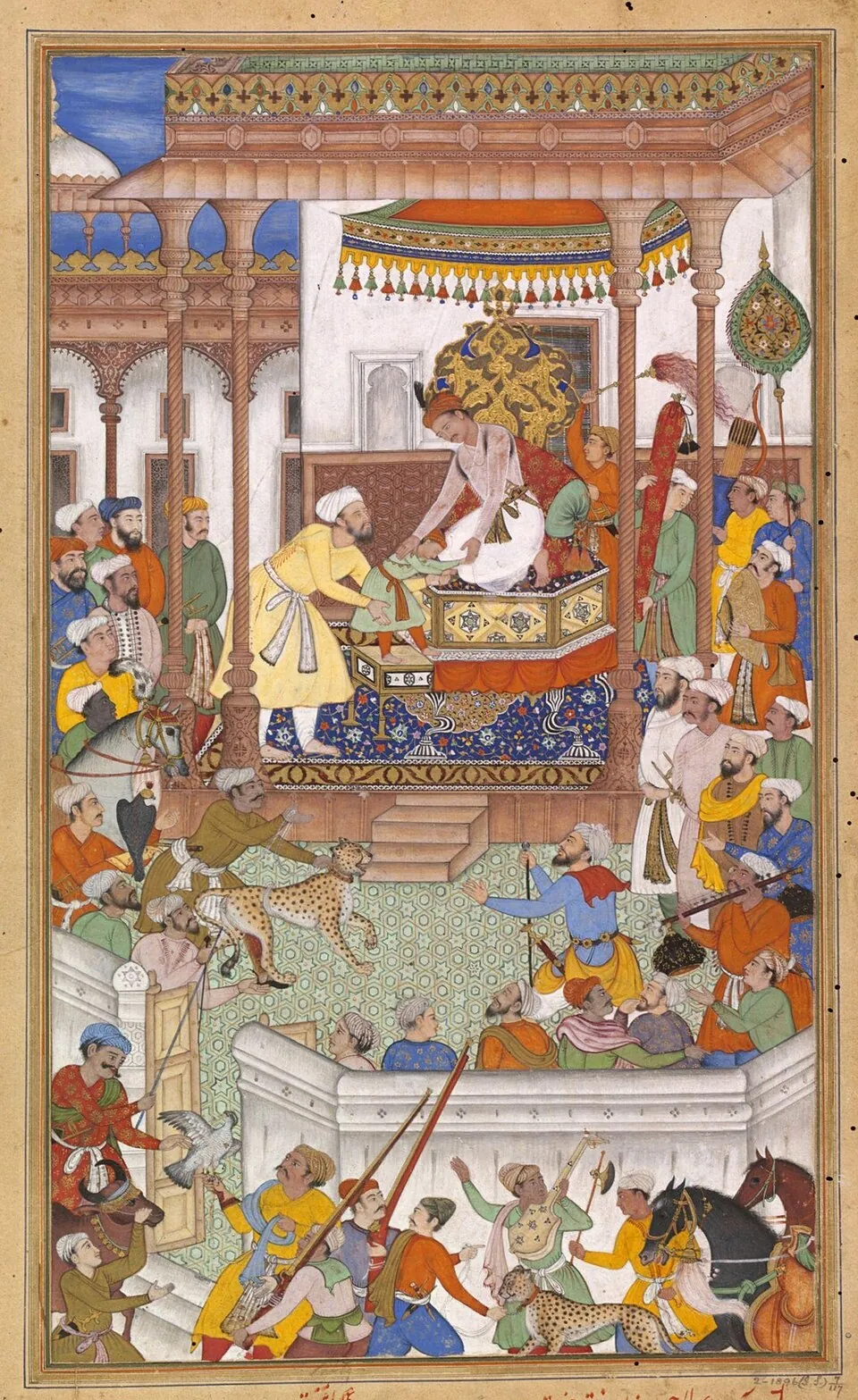
Rahim Khan-i-Khanan, Poet of the Dohas
Rahīm · रहीम
Abdul Rahim, titled Khan-i-Khanan and known simply as Rahim, lived from 1556 to 1627. A poet and one of the nine celebrated ministers of Akbar's court, he was admired for his Hindustani couplets (dohas) and for books on astrology, and he served the Mughal state as a soldier and administrator.
Khānzāda Mirzā Khān Abdul Rahim, born in 1556 and dying in 1627, is remembered as Rahim and by his title Khan-i-Khanan. He lived under the Mughal emperor Akbar, who acted as his mentor, and he was counted among the Navaratnas, the nine eminent ministers of Akbar's court. Rahim was both a statesman and a soldier, and he served the Mughal state in military and administrative roles. His enduring fame, however, rests on poetry. He composed dohas, short rhyming couplets in Hindustani, that deal with friendship, humility, wealth, adversity and conduct, and many are still learned by schoolchildren and quoted in everyday speech in north India. He also wrote on astrology. His verse reflects a culture in which Persian court life and Hindi devotional and moral writing met easily; he is known for his admiration for Kṛṣṇa and for friendship with the poet Tulsīdās. The date used here falls in the middle of his years of service at court. Rahim's verses show how Mughal courtly society could produce literature steeped in the local linguistic traditions of the Hindi-speaking regions.
Sources
- Abdul Rahim Khan-i-Khanan Wikipedia · CC-BY-SA-4.0
- Q317364 Wikidata · CC0-1.0