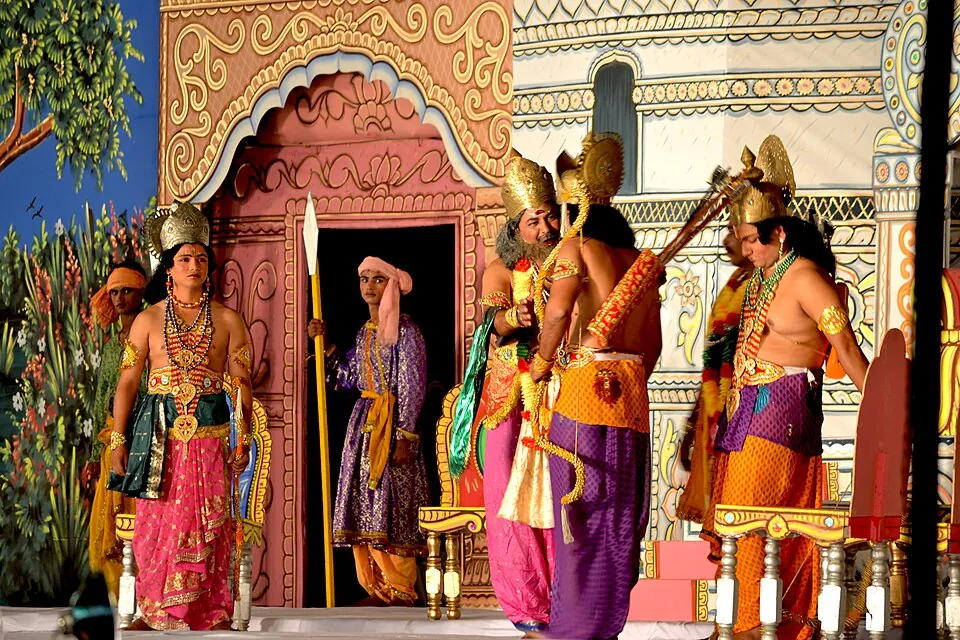
Rāmlīlā: The Folk Theatre of Rāma's Story
Rāmalīlā · रामलीला
Dated by traditional Rāmāyaṇa chronology; the performance form is later.
Rāmlīlā is the dramatic folk retelling of Rāma's life, staged across India during the autumn festival of Navarātri. Most northern performances draw on Tulsīdās's Rāmcaritmānas, and the cycle ends on Vijayadaśamī with the burning of giant effigies of the demon king Rāvaṇa, usually amid fireworks.
Rāmlīlā, literally 'the play of Rāma', refers to the many theatrical and dance events that re-enact the Rāmāyaṇa story, above all during the autumn festival of Navarātri. Productions are usually open-air and organised by local committees called samitis, funded by villagers or neighbourhoods themselves. A core group of trained performers carries the drama, but audiences often join in spontaneously. In north India most Rāmlīlās use the Awadhi verses of the sixteenth-century Rāmcaritmānas by Tulsīdās as their spoken text, while other regions draw on different tellings. The sequence builds toward the legendary battle between good and evil, and on the night of Vijayadaśamī, or Dussehra, large effigies of Rāvaṇa and his kin are set alight, often with fireworks. The Rāmāyaṇa itself is a Sanskrit epic dated by scholars to the first millennium BCE, and Rāmlīlā is a later adaptation of its stories as living performance. The date given here refers to the epic's traditional chronology and not to the origin of the theatre form, which developed over later centuries.