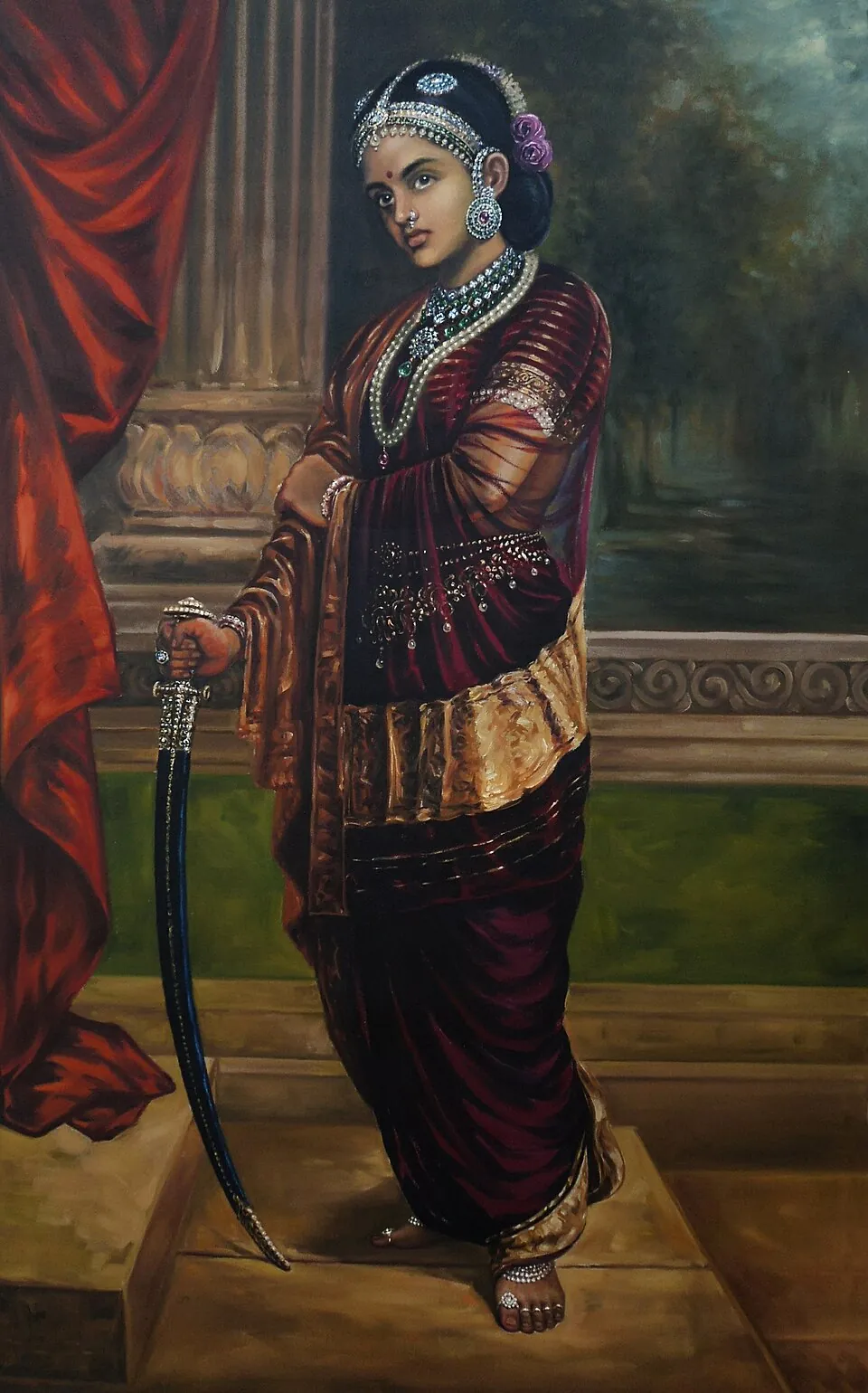
Rānī Lakṣmībāī Falls at Gwalior
Lakṣmībāī · लक्ष्मीबाई
Rānī Lakṣmībāī of Jhansi, queen consort from 1843 and a principal leader of the 1857 uprising, fought the British after Jhansi was absorbed under the Doctrine of Lapse. She died in battle on 18 June 1858 and remains a potent symbol of Indian nationalism.
Lakṣmībāī, Rānī of Jhansi, was born Manikarṇikā Tambe, with her birth year given variously as 1827 to 1830 or 1835. She died on 18 June 1858 and stood among the principal leaders of the 1857 uprising against Company rule. Born into a Marathi family in Vārāṇasī, she was married young to Gaṅgādhar Rāo, the raja of Jhansi, and was queen consort from 1843 to 1853. Their only son died in infancy, so on his deathbed in 1853 Gaṅgādhar Rāo adopted a young relative, Dāmodar Rāo, as heir. The East India Company, already dominant across much of India, would not accept the adoption. It took over Jhansi through the Doctrine of Lapse and brushed aside her forceful appeals to Governor-General Lord Dalhousie. When Indian troops at Jhansi mutinied in May 1857 and killed most of the British in the town, her own part in those events was and still is debated. She took over the government, raised an army and fought several battles against British forces, and she died while fighting in June 1858. Her life is celebrated in modern India as an emblem of courage and resistance.
Sources
- Lakshmibai, Rani of Jhansi Wikipedia · CC-BY-SA-4.0
- Q181878 Wikidata · CC0-1.0