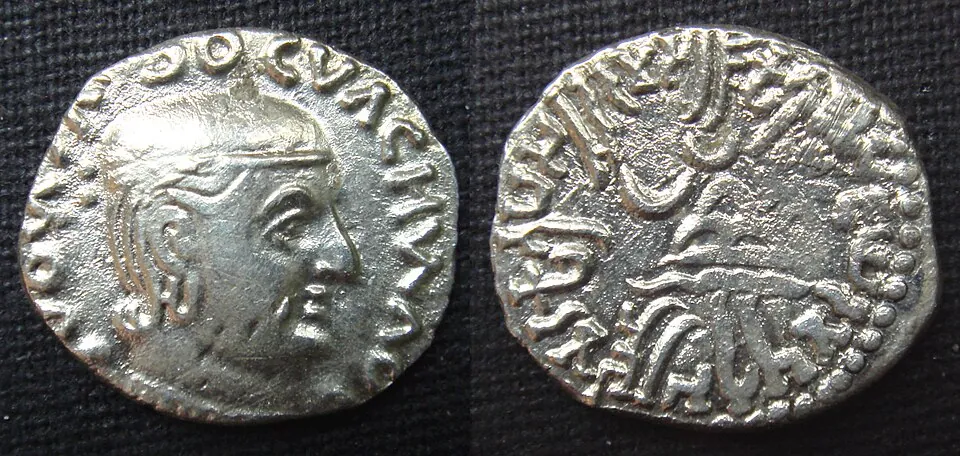
Rudradāman I and the Junagadh Rock Inscription
Rudradāman · रुद्रदामन्
Rudradāman I, a Śaka ruler of the Western Kṣatrapas, reigned from about 130 to 150 CE and took the title Mahākṣatrapa. His strength contributed to the decline of the Sātavāhana empire. His Junagadh rock inscription is a landmark of early Sanskrit prose.
Rudradāman I was a ruler of the Western Kṣatrapa line, a Śaka dynasty that governed parts of western India. He was grandson of Caṣṭana and reigned from about 130 to 150 CE. After taking the throne he strengthened his realm and assumed the title Mahākṣatrapa, Great Satrap, and his campaigns played a significant part in weakening the Sātavāhana empire to the south and east. He is best known today from the long rock inscription at Junagadh in Gujarat, composed in Sanskrit and dated around 150 CE. It records the repair of the Sudarśana lake, a reservoir whose dam, first built under the Mauryas, had burst in a storm; the text is widely valued as an early example of ornate Sanskrit prose and as a source on the political geography of the period. The year shown marks the end of his reign and the date commonly given for the inscription, and it comes from epigraphic evidence, though reign dates for the Kṣatrapas are reconstructed from coins and inscriptions.
Sources
- Rudradaman I Wikipedia · CC-BY-SA-4.0
- Q1260392 Wikidata · CC0-1.0