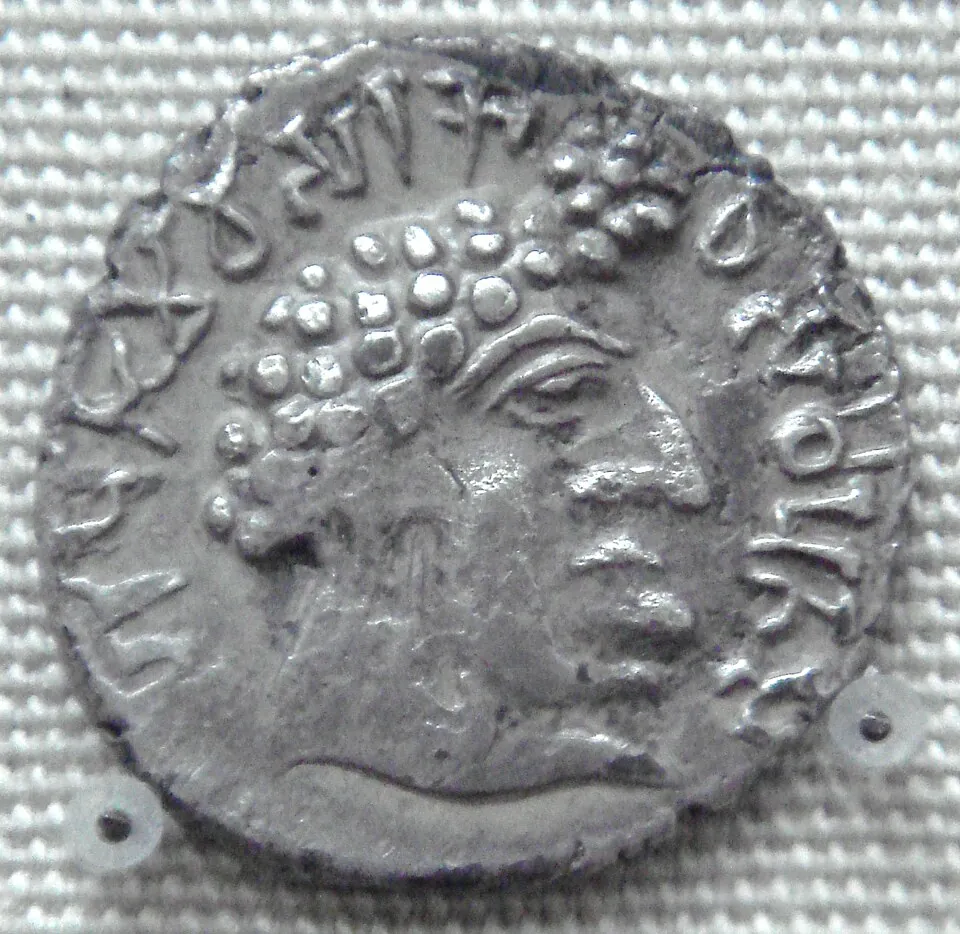
Vāsiṣṭhīputra Pulumāvi, Sātavāhana King
Vāsiṣṭhīputra Pulumāvi · वासिष्ठीपुत्र पुलुमावि
Reign c. 85-125 CE in the newer consensus; older estimates differ.
Vāsiṣṭhīputra Pulumāvi, son of Gautamīputra Sātakarṇi, was a Sātavāhana king whose reign is now generally placed about 85 to 125 CE. Ptolemy calls him Siriptolemaios, a contemporary of the Western Kṣatrapa Caṣṭana. He ruled chiefly from Dhānyakaṭaka in the Deccan.
Vāsiṣṭhīputra Śrī Pulumāvi, written Vāsiṭhiputa Puḷumāvi in Brāhmī inscriptions, was a king of the Sātavāhana dynasty and the son of Gautamīputra Sātakarṇi. His reign was formerly placed variously between 110 and 138 CE or between 130 and 159 CE, but a newer consensus assigns it to about 85 to 125 CE. The Greek geographer Ptolemy, writing in the second century, calls him Siriptolemaios and presents him as a contemporary of Caṣṭana, the Western Kṣatrapa ruler of Ujjain. This synchronism has been important in sorting out the chronology of both houses, who were long-standing rivals for control of western India and the Deccan. Tradition makes Pulumāvi the first Sātavāhana monarch to govern entirely from Dhānyakaṭaka, modern Dharaṇikoṭa in Andhra Pradesh, although some authors give Paiṭhaṇ as his seat. His reign falls in the time when the dynasty's power moved from the northern Deccan towards the Kṛṣṇā valley, an area that later became famous for Buddhist monuments such as Amarāvatī. The dates are scholarly estimates and are still debated.
Sources
- Vasishthiputra Pulumavi Wikipedia · CC-BY-SA-4.0
- Q7916834 Wikidata · CC0-1.0