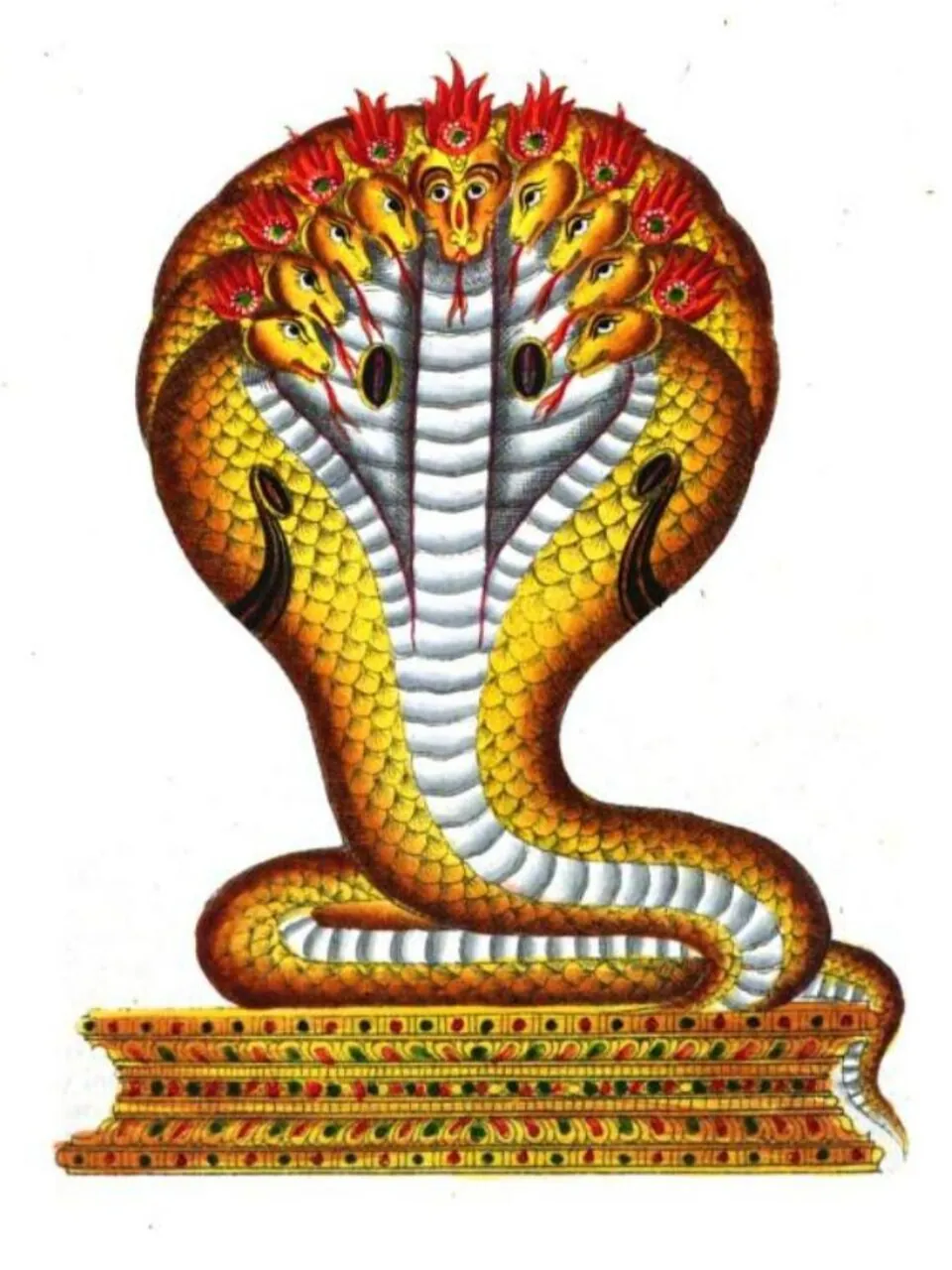
Śeṣa, the Serpent Who Bears the Worlds
Śeṣa · शेष
Purāṇic cosmic time; the year is a schematic timeline placeholder, not a dated event.
In the Purāṇas, Śeṣa, also called Anantaśeṣa, is the primordial serpent king who supports the planets on his hoods while praising Viṣṇu, who reclines upon him. Tradition identifies him with Lakṣmaṇa in the Rāmāyaṇa. His story belongs to sacred cosmology, not dated history.
Śeṣa, whose name means remainder, is known also as Śeṣanāga and Ādiśeṣa, and, as Ananta, the endless one. In Hindu tradition he is a great serpent, the king of the nāgas, and a primordial being present at the time of creation. The Purāṇas describe him as carrying the planets of the universe on his many hoods while singing the glory of Viṣṇu from every mouth. Viṣṇu in his Nārāyaṇa form is traditionally shown resting on Śeṣa's coils with his consort Lakṣmī, and together with the eagle Garuḍa, Śeṣa is counted among the god's chief companions and vehicles. Tradition further holds that he took birth on earth as Lakṣmaṇa, the younger brother of Viṣṇu's incarnation Rāma. These accounts belong to sacred narrative and cosmology, and they are not events datable in human history. The very large negative year assigned to this entry is a placeholder in the traditional cosmic reckoning, not a measurement. Śeṣa remains a prominent figure in temple sculpture and in devotional imagery, particularly in scenes of Viṣṇu reclining on the cosmic ocean.