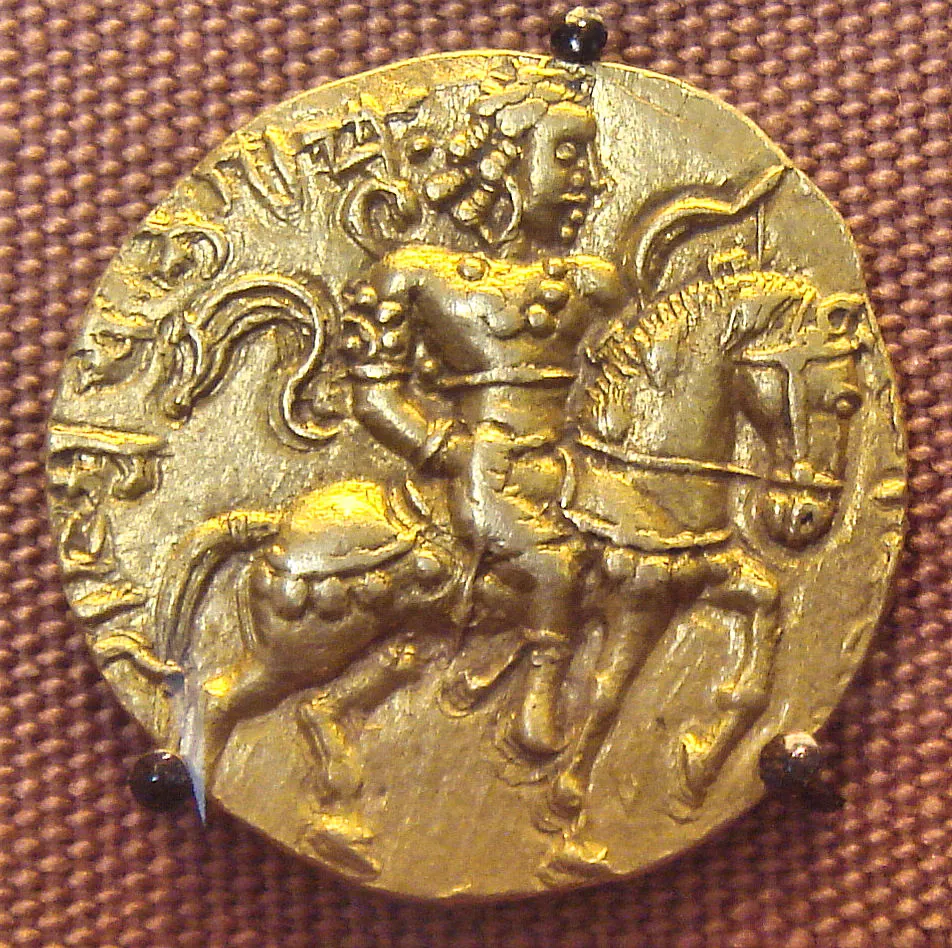
Śrī Gupta, Founder of the Gupta Line
Śrī Gupta · श्री गुप्त
Śrī Gupta, active in the late third century CE, is regarded as the first ruler of the Gupta dynasty in eastern India. The Chinese monk Yijing says a king named Che-li-ki-to built a temple for Chinese pilgrims, and modern scholars identify him with Śrī Gupta.
Gupta, often written Śrī Gupta, was the founder of the Gupta dynasty and is placed in the late third century CE, with records giving his years as roughly 240 to 280. He is known from very little direct evidence. The seventh-century Chinese Buddhist traveller Yijing writes of a king called Che-li-ki-to, a Chinese rendering believed to stand for Śrī Gupta, who built a temple near a place called Mṛgaśikhāvana for pilgrims from China. That temple stood somewhere in eastern India, and modern scholars differ on where, since the identification of the site is unsure. Depending on their view, they place his territory either in eastern Uttar Pradesh or in the Bengal region. Because the evidence is so thin, the date and the extent of his kingdom are approximations. His lasting importance lies in the dynasty that followed, which under later rulers such as Candragupta I and Samudragupta created a major empire in northern India. The early Gupta rulers used the modest title of mahārāja, and later genealogies in Gupta inscriptions begin with this founder, which keeps his name alive.
Sources
- Gupta (king) Wikipedia · CC-BY-SA-4.0
- Q4664626 Wikidata · CC0-1.0