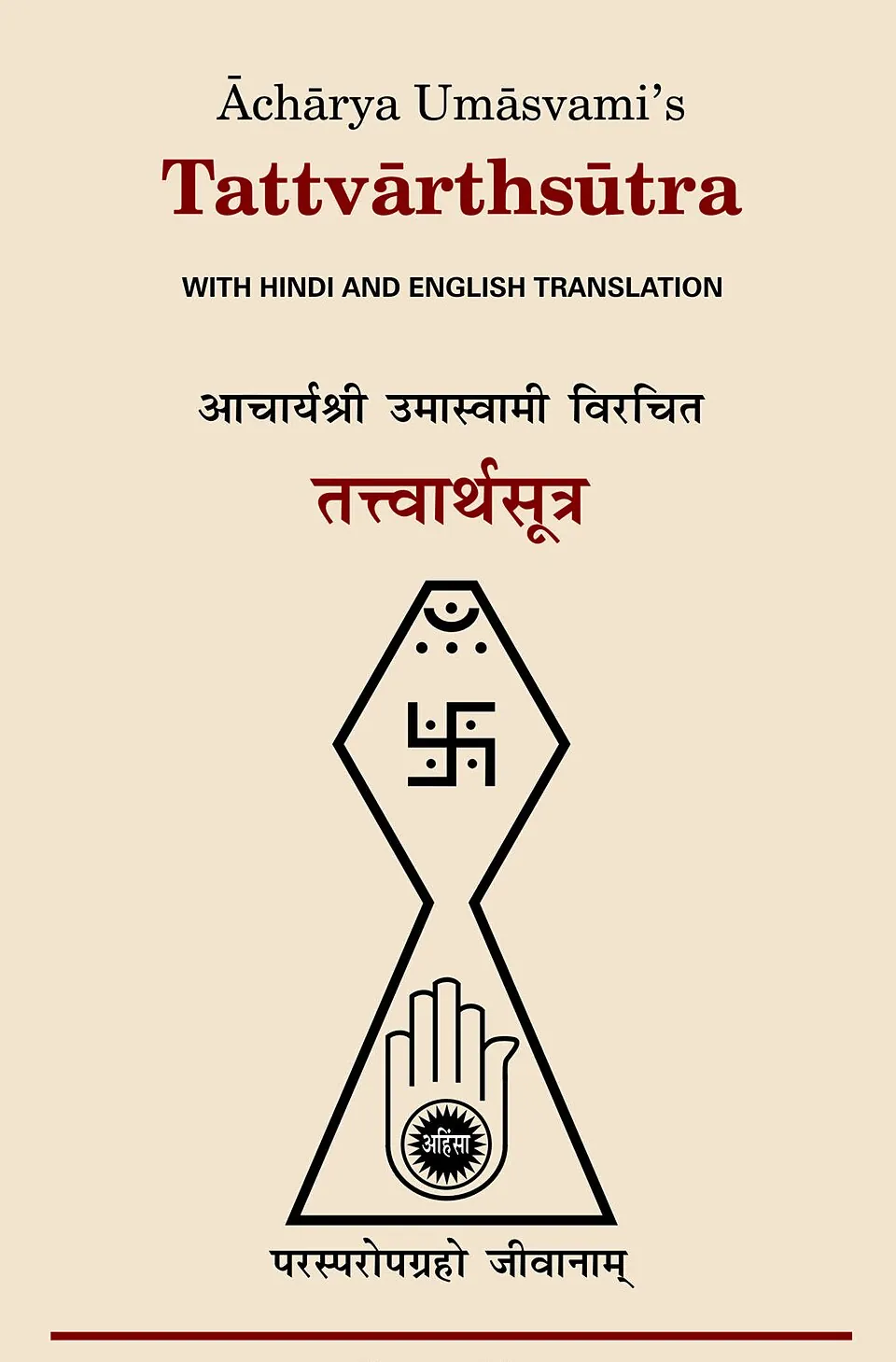
Umaswami's Tattvartha Sutra Summarises Jain Doctrine
Tattvārthasūtra · तत्त्वार्थसूत्र
The Tattvartha Sutra, composed in Sanskrit by Acharya Umaswami between about the second and fifth centuries CE, presents Jain philosophy in 350 aphorisms. Both Digambaras and Shvetambaras accept it as authoritative, and it has drawn commentary and translation for centuries, and its aphorisms are memorised by many Jains.
The Tattvartha Sutra, whose title means the aphorisms on the nature of reality, is a Jain text composed in Sanskrit by Acharya Umaswami, also called Umasvati. Scholars place its writing somewhere between the second and the fifth centuries CE, a wide range that this entry reflects with an approximate span. It is regarded as one of the earliest and most authoritative works of Jainism, and uniquely it is accepted by both major branches, the Digambara and the Shvetambara, as well as by smaller groups. The book is philosophical and written in the terse sutra style, which sets out the complete Jain system in 350 aphorisms divided into ten chapters. These cover the path to liberation through right faith, right knowledge and right conduct, the nature of souls and non-living matter, the working of karma, the stages of spiritual progress and the final state of liberation. Its importance in Jainism is often compared to that of the Brahma Sutras and the Yoga Sutras of Patanjali in the Hindu tradition. One of its sutras, parasparopagraho jivanam, is used as a motto of the faith and is often read as meaning that living beings exist to support each other. Many commentaries, translations and interpretations began to appear from the fifth century.
Sources
- Tattvartha Sutra Wikipedia · CC-BY-SA-4.0
- Q1778761 Wikidata · CC0-1.0