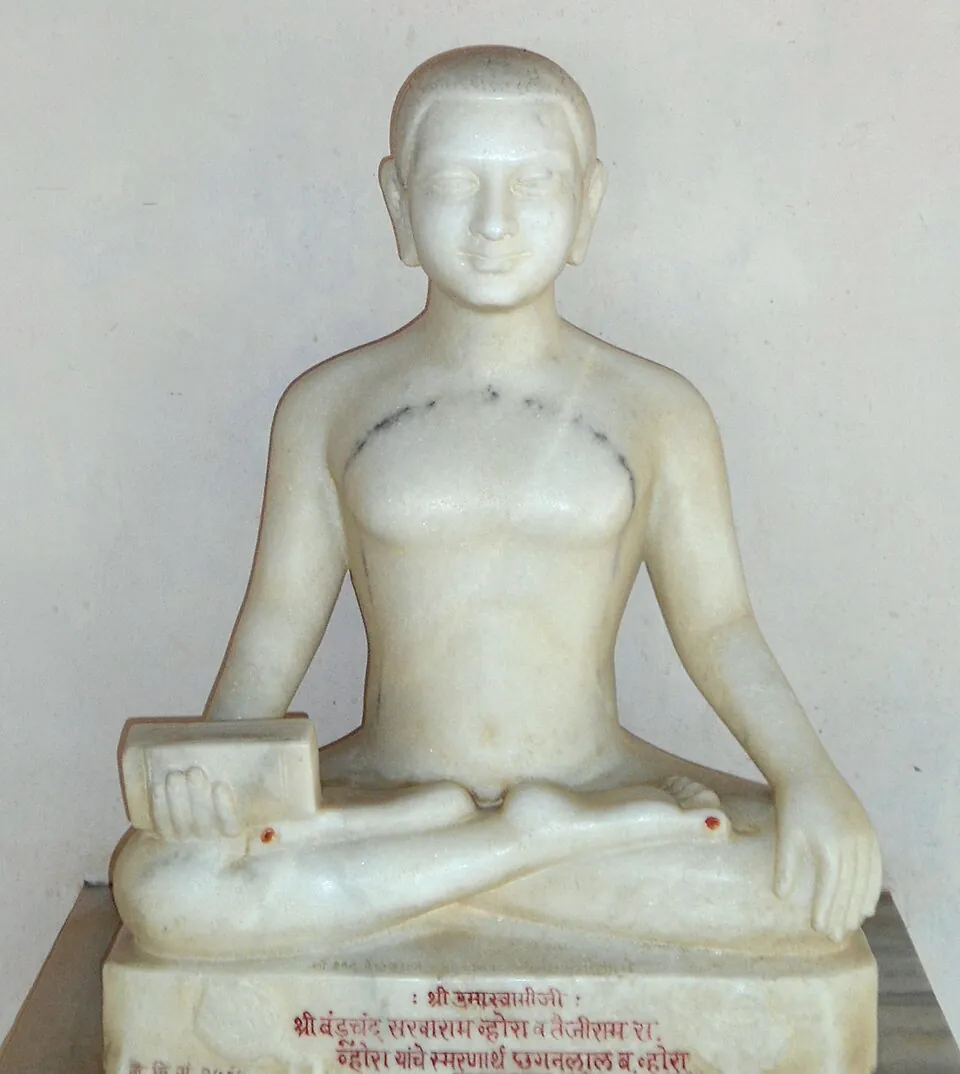
Umāsvāti Composes the Tattvārtha Sūtra
Umāsvāti · उमास्वाति
Vācaka Umāsvāti, an Indian scholar placed between the second and fifth centuries CE, wrote the Tattvārtha Sūtra, the earliest comprehensive Sanskrit work of Jain philosophy accepted as authoritative by all four Jain traditions. Both Śvetāmbara and Digambara communities claim him.
Vācaka Umāsvāti, also called Umāsvāmī, was a Jain scholar who probably lived sometime between the second and fifth centuries CE. His great work is the Tattvārtha Sūtra, also known as the Tattvārthādhigama Sūtra, whose title can be rendered as All That Is. It was the first text on Jain philosophy written in Sanskrit, and it is the oldest surviving comprehensive treatment of the subject that all four Jain traditions regard as authoritative. Within Jainism it holds a place comparable to that of the Vedanta Sūtras and Yoga Sūtras in Hinduism. Both major sects, the Śvetāmbaras and the Digambaras, claim Umāsvāti as their own. Moriz Winternitz thought his views fit the Śvetāmbara position better, suggesting that he may have been a Śvetāmbara ascetic and that Digambara claims were weak. The dates given are broad, reflecting the uncertainty, and the work is usually treated as a milestone in the systematic presentation of Jain doctrine.