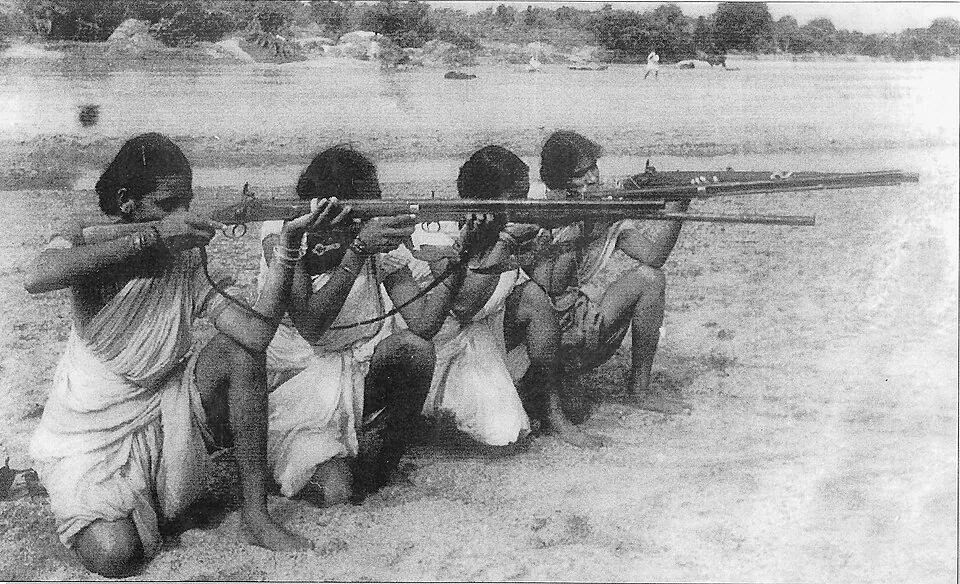
The Telangana Rebellion Against Hyderabad's Landlords
The Telangana Rebellion of 1946 to 1951 was a communist-led peasant uprising against the princely state of Hyderabad. It grew out of food shortages and the dominance of landed lords, and began on 4 July 1946 after the killing of a local peasant leader in Warangal.
Hyderabad was a feudal monarchy in which a small class of landlords, called doras or deshmukhs, held most of the land in Telangana. They exercised nearly total power over the peasantry, and in some places held farm workers in what amounted to bonded labour. Conditions grew worse in the 1930s because of the Great Depression and a shift toward commercial crops. During the 1940s many peasants turned to communism and organised through the Āndhra Mahāsabhā, pressing for rights. A food crisis following the Second World War pushed the movement towards open revolt once the state and the landlords tried to suppress it. The rebellion began on 4 July 1946, when agents of a landlord killed a local peasant leader in the village of Kadavendi in Warangal. It lasted until 1951, outliving Hyderabad's accession to India in 1948. The struggle became one of the best-known peasant insurrections in modern India and left a lasting mark on land reform debates and on left politics in the Telugu country.
Sources
- Telangana Rebellion Wikipedia · CC-BY-SA-4.0
- Q3380689 Wikidata · CC0-1.0