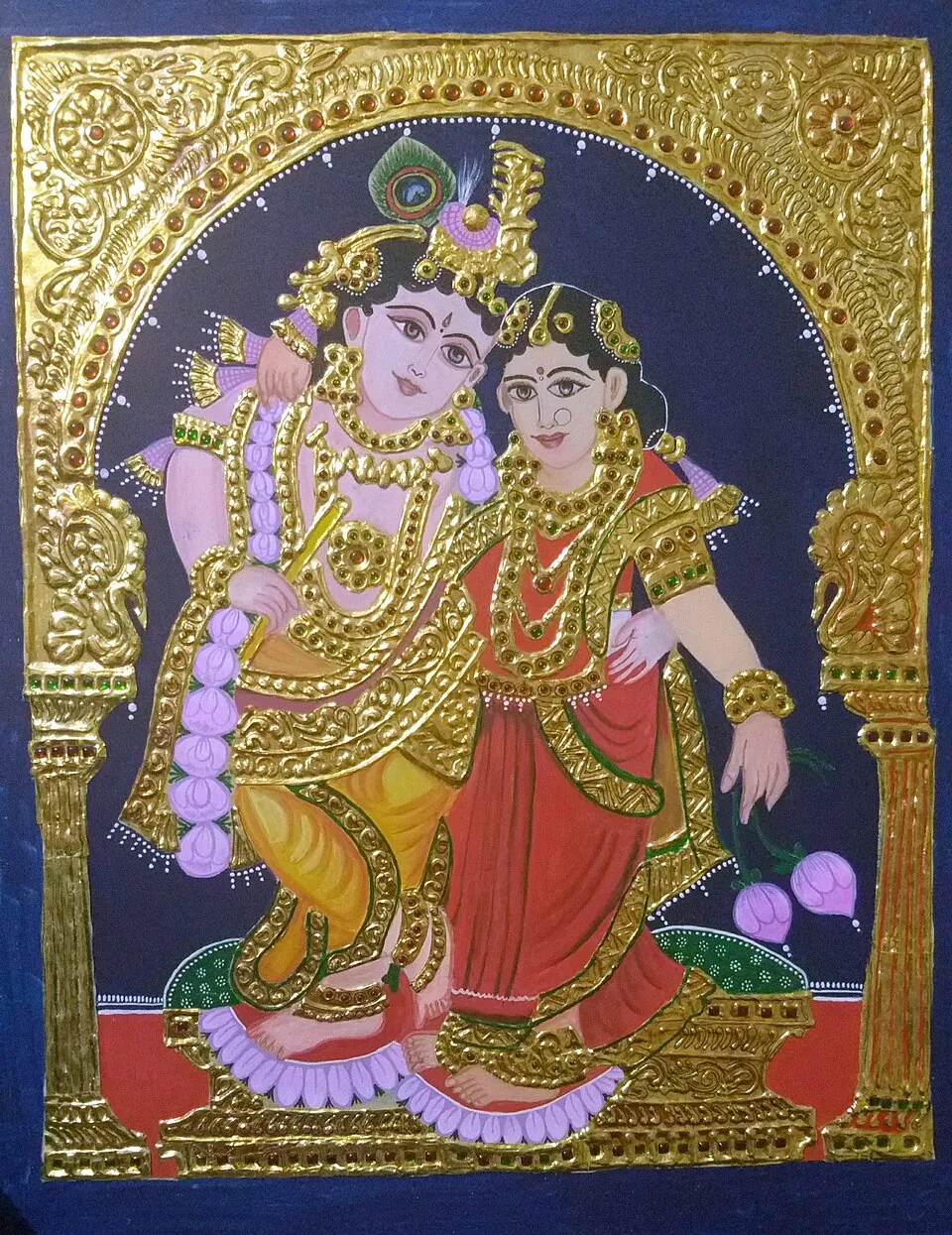
Thanjavur Painting Takes Shape at the Maratha Court
Tañjāvūr Ōviyam · तंजावुर चित्रकला
Thanjavur painting is a classical south Indian style known for rich colours and glittering gold-leaf work. It drew on art patronised by the Nayakas around 1600, but its familiar form developed at the Maratha court of Thanjavur, and it received a geographical indication in 2007–08.
Thanjavur, or Tanjore, painting is a classical style of Tamil Nadu. Its roots go back to about 1600, when the Nayaka rulers of Thanjavur, who owed allegiance to the Vijayanagara kings, encouraged dance, music, literature in Telugu and Tamil, and the painting of Hindu religious subjects in temples. The style as it is known now, however, probably took shape under the Marathas, who ruled at Thanjavur from 1676 to 1855. The works are marked by deep, vivid colour, simple iconic compositions and decoration in gold foil with inlaid glass or gems, and their subjects are most often forms of Kṛṣṇa, Śiva, Viṣṇu, and Devi. Panels were traditionally made on wood and later on cloth and glass, to be placed in homes and shrines for worship. Because the development was gradual rather than the work of one person, the date shown is approximate and stands for the style's mature phase in the late eighteenth century. In 2007 to 2008 the Government of India registered Thanjavur painting as a geographical indication, protecting its identity as a regional craft.
Sources
- Thanjavur painting Wikipedia · CC-BY-SA-4.0
- Q3108584 Wikidata · CC0-1.0