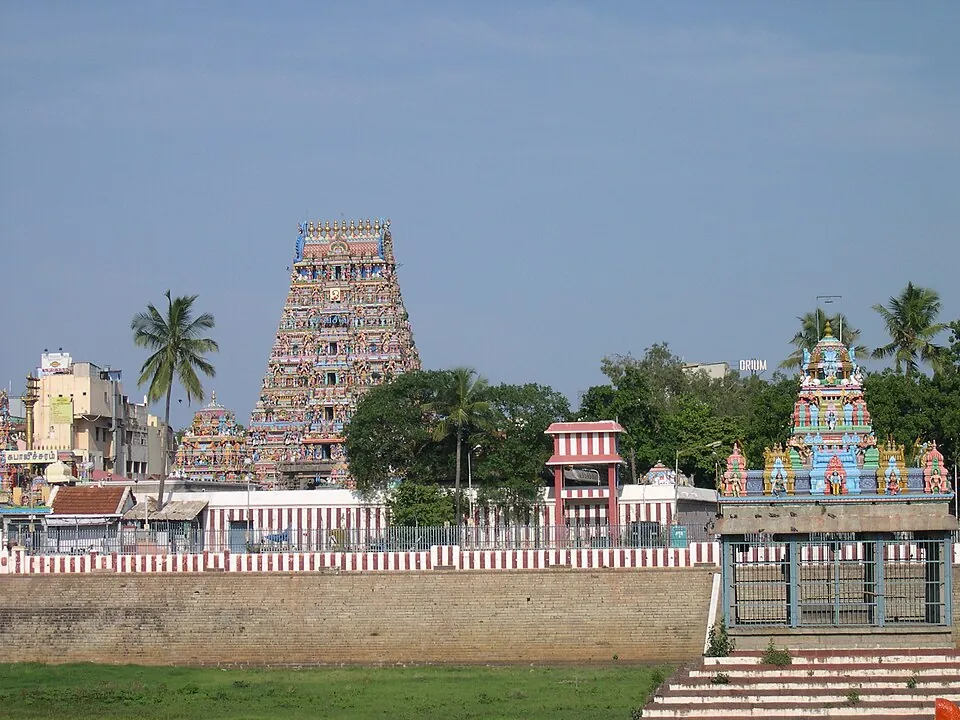
Kapaleeshwarar Temple Rises in Mylapore
Kapālīśvara Koyil · कपालीश्वर मंदिर
The Kapaleeshwarar Temple in Mylapore, Chennai, is a Śiva shrine whose present Dravidian structure is generally dated to about the seventeenth century. Its presiding deity is praised in the early Tamil Tēvāram hymns, which links the sacred site to a far older devotional history than the standing buildings.
Kapaleeshwarar Temple stands in Mylapore, a neighbourhood of Chennai in Tamil Nadu, and is dedicated to Śiva in the form of Kapāleeśvara, worshipped through the liṅga. His consort is venerated as Karpagambal, the goddess of the wish-yielding tree. Local tradition, drawn from the Purāṇas, explains the area's Tamil name Mayilai through the story of Pārvatī worshipping Śiva in the form of a peahen, since mayil means peacock. The temple's surviving architecture is a fine example of South Indian temple building and is usually assigned to roughly the seventeenth century. However, the shrine's reputation is much older: it is praised in the Tēvāram, the seventh-century Tamil Śaiva hymns composed by the Nāyaṇārs, and it is counted among the Pāṭal Peṟṟa Sthalams, the temples celebrated in those songs. The distinction matters, because the sacred site and its devotional fame predate the buildings visitors see now. Today the complex is administered by the Tamil Nadu government's Hindu Religious and Charitable Endowments Department and remains a living centre of worship and festivals in the city.
Sources
- Kapaleeshwarar Temple Wikipedia · CC-BY-SA-4.0
- Q1587164 Wikidata · CC0-1.0