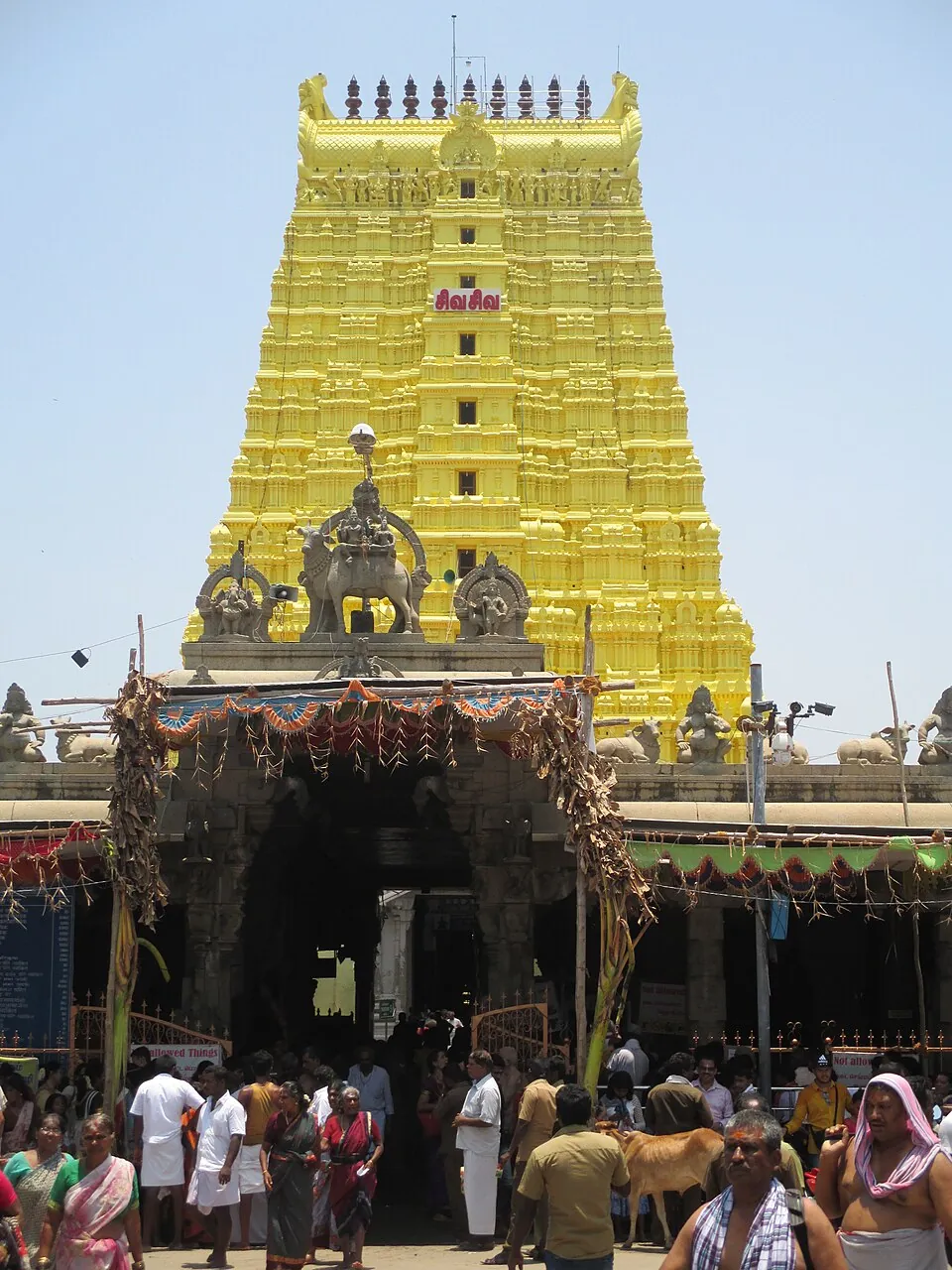
Ramanathaswamy Temple Takes Shape on Rameswaram Island
On Rameswaram island in Tamil Nadu stands the Ramanathaswamy Temple, a Śiva shrine counted among the twelve Jyotirlingas and the Char Dham pilgrimage sites. Tradition says Rāma worshipped here before crossing to Laṅkā. Historically, the Pandya rulers enlarged it in the twelfth century, and Jaffna kings later restored its sanctum.
Ramanathaswamy Temple sits on Rameswaram island off the Tamil coast and is devoted to Śiva. It holds a double distinction: it is one of the twelve Jyotirlinga sites and also one of the four Char Dham pilgrimage destinations. Tamil Śaiva devotion honours it too, since the Nāyaṇār poet-saints Appar, Sundarar and Sambandar sang its praises, making it one of the 276 Pāṭal Peṟṟa Sthalams. By local tradition, the lingam was set up by Rāma, who is said to have prayed to it prior to crossing the Rāma Setu towards Laṅkā; this belongs to sacred narrative and is not a datable event. The documented building history is more modest. The temple was expanded in the twelfth century under the Pandya dynasty, and its main sanctum was later renovated by two Jaffna kingdom rulers, Jeyaveera Cinkaiariyan and his successor Gunaveera Cinkaiariyan. The temple is also noted for having the longest pillared corridors of any Hindu temple, which make it a celebrated example of Dravidian temple architecture and a destination for pilgrims from across the subcontinent.
Sources
- Ramanathaswamy Temple Wikipedia · CC-BY-SA-4.0
- Q14565670 Wikidata · CC0-1.0