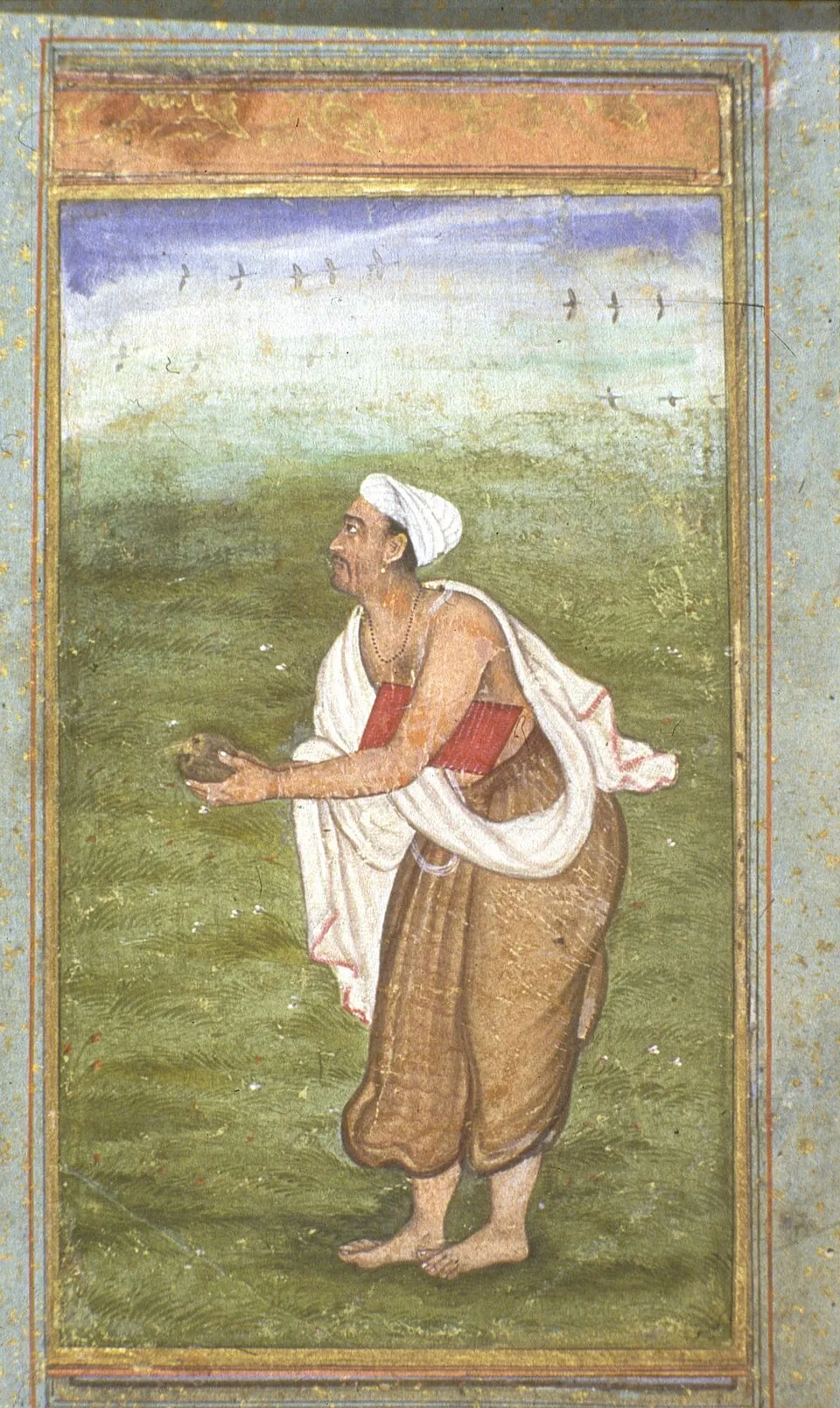
Keśavdās Writes the Rasikpriyā
Keśavdās · केशवदास
Keśavdās Miśra (1555 to 1617) was a Hindi poet, scholar and administrator under the patronage of Vīr Siṃh Deo of Orchha, a Mughal vassal. His Rasikpriyā is a pioneering work of the Rīti Kāl, the ornate courtly period of Hindi literature.
Keśavdās Miśra, who lived from 1555 to 1617, was a poet, scholar and administrator from the Bundelkhand region. He enjoyed the patronage of Vīr Siṃh Deo of Orchha, a ruler who served as a vassal of the Mughal empire, and worked at his court. His best-known book is the Rasikpriyā, composed around the close of the sixteenth century, a treatise on the theory of poetry and the classification of heroes and heroines in love, illustrated with his own verses in Braj Bhāṣā. It is regarded as a pioneering text of the Rīti Kāl, the stretch of Hindi literary history in which court poets joined rules of Sanskrit poetics with polished lyric composition. He also wrote other works, among them the Kavipriyā, and his Rāmacandrikā retold the story of Rāma in an elaborate style. Later poets of the Rīti tradition looked to him as a model and sometimes as the founder of the movement. The date used here marks the height of his career at Orchha, around the turn of the seventeenth century, and is approximate.