Traikūṭaka Kings Govern the Northern Konkan
Traikūṭaka · त्रैकूटक
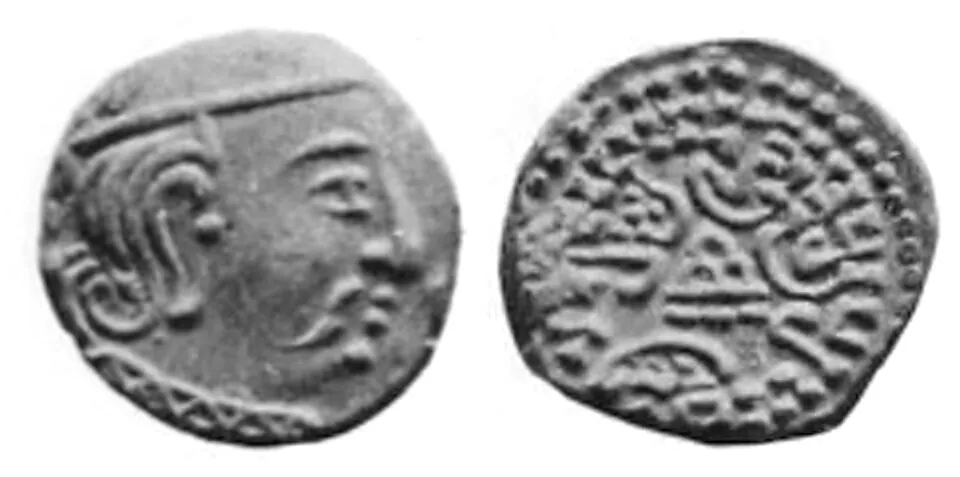
The Traikūṭakas formed a royal line that held sway between about 388 and 456 CE across northern Konkan, Aparānta and northern Maharashtra. Their name may refer to a three-peaked mountain, and their coinage in southern Gujarat and Maharashtra closely follows that of the Western Kṣatrapas.
This royal house governed parts of western India between roughly 388 and 456 CE. Their name seems to derive from Trikūṭa, a mountain with three peaks. Kālidāsa's Raghuvaṃśa mentions them and places them in the northern Konkan, the coastal strip below Gujarat. Their territory is understood to have included Aparānta, the western coastal belt, as well as northern Maharashtra. The best surviving evidence is numismatic. Their coins turn up in large numbers across southern Gujarat and in southern Maharashtra on the far side of the Ghāṭs, and the design is strikingly close to that of the Western Kṣatrapas, the dynasty from whom they probably took over some lands. On certain pieces faint traces of the earlier Greek-derived lettering can still be seen on the front of the coin. The Traikūṭakas thus mark a handoff of regional power between the Kṣatrapa rulers and the Vākāṭakas and Guptas who shaped the following era. Little narrative history survives, so the dates come mainly from inscriptions and coin series and should be read as scholarly estimates.
Sources
- Traikutaka dynasty Wikipedia · CC-BY-SA-4.0
- Q7832705 Wikidata · CC0-1.0