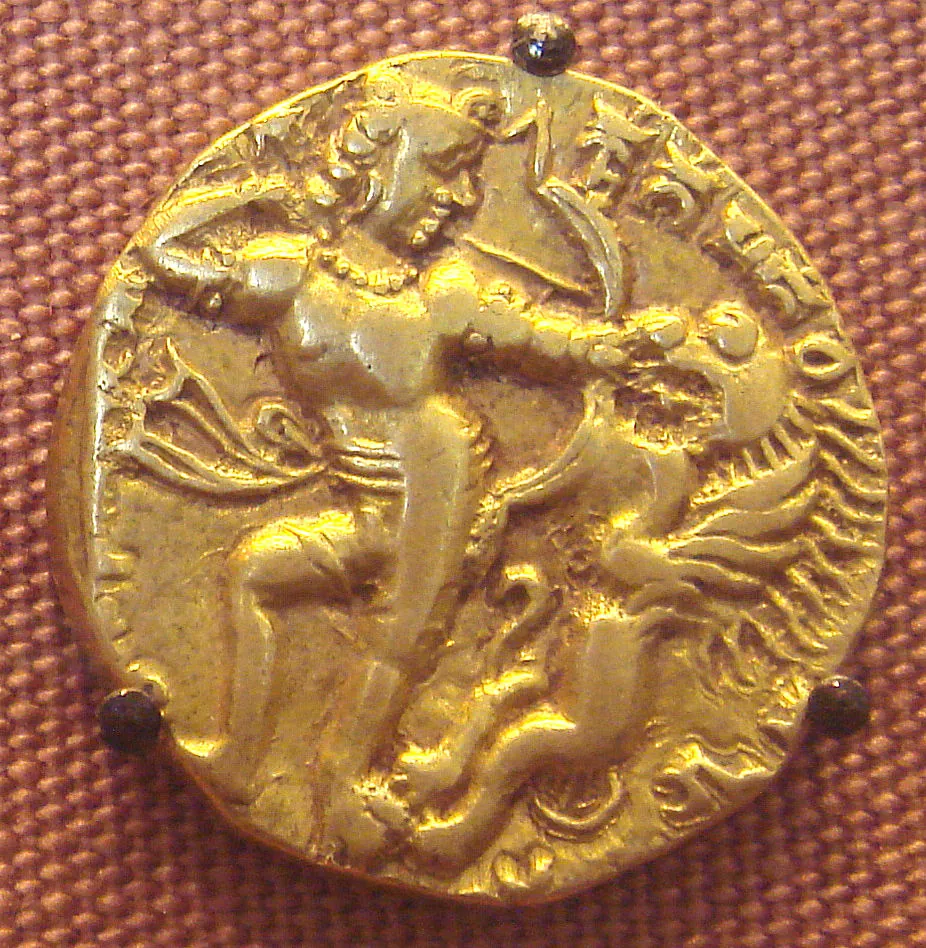
Kumāragupta I, Gupta Emperor of a Long Peace
Kumāragupta · कुमारगुप्त
Kumāragupta I, also called Mahendrāditya, ruled the Gupta empire from about 415 to 455 CE. Son of Candragupta II, he held a realm stretching from Gujarat to Bengal and performed an Aśvamedha sacrifice. Nālandā's monastery may have been founded in his time.
Kumāragupta I was born to Candragupta II and Queen Dhruvadevī, and took the epithet Mahendrāditya. His reign ran from about 415 to 455 CE. He probably kept control of the large inheritance he received, which reached from what is now Gujarat in the west to Bengal in the east. He carried out an Aśvamedha, the horse sacrifice by which kings proclaimed imperial sovereignty, though little is known of any military successes. Inscriptions and coins have led some historians to suggest he overcame two neighbours, the Aulikaras in central India and the Traikūṭakas further west. The great monastery of Nālandā may have been built in his time, making his rule significant in the history of Buddhist education. The later Bhitarī pillar inscription says his successor Skandagupta restored the family's fallen fortunes, which has been read as a sign that his last years brought reverses, perhaps against the Puṣyamitras or the Hūṇas. That conclusion is uncertain, since the crisis described may have followed his death.
Sources
- Kumaragupta I Wikipedia · CC-BY-SA-4.0
- Q470715 Wikidata · CC0-1.0