Rāmagupta and the Devīcandraguptam Tradition
Rāmagupta · रामगुप्त
Rāmagupta, a Gupta ruler of the late fourth century CE, is known mainly from the fragmentary Sanskrit play Devīcandraguptam, which says he agreed to give his queen to a Śaka enemy until his brother Candragupta II killed the foe. The official Gupta genealogy omits him, so his historicity is debated.
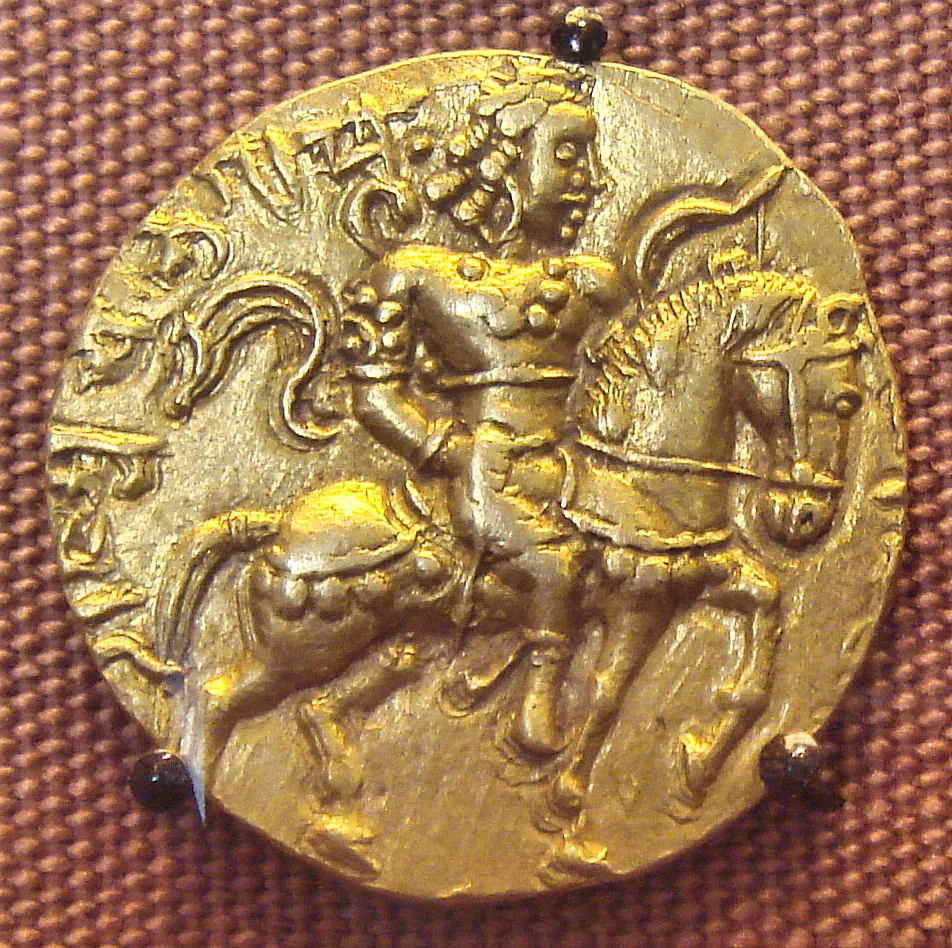
Rāmagupta is a puzzling figure of Gupta history. The surviving fragments of the Sanskrit play Devīcandraguptam, together with other literary hints, describe him as an emperor of the Gupta line in northern India who, besieged by a Śaka enemy, agreed to surrender his wife Dhruvadevī. His brother Candragupta II is said to have gone in her place, killed the Śaka ruler, and later deposed Rāmagupta and married Dhruvadevī. The official Gupta genealogies do not name Rāmagupta at all, so some historians doubt that he reigned. Other sources allude to the same events without naming him and may depend on the play itself. At the same time, three undated inscriptions in a script of the period, found at Vidisha, are attributed to a ruler of that name, and copper coins found in central India also bear it, which gives some support to a historical Rāmagupta. The exact dates are uncertain, so this entry marks the late fourth century CE and carries lower confidence.