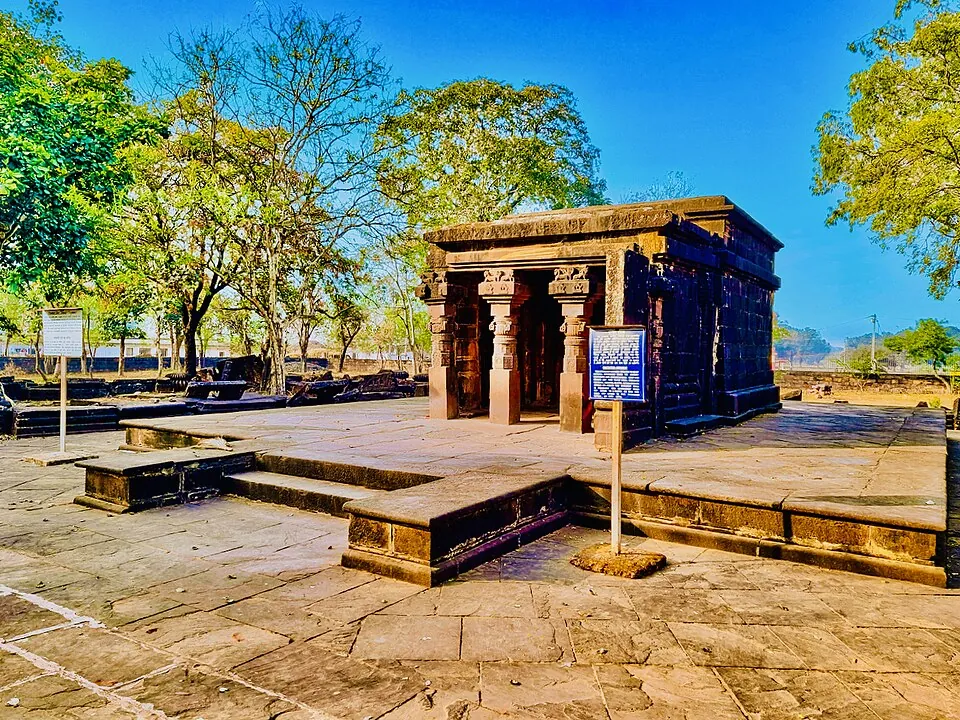
Kankali Devi Temple at Tigawa
Tigavā, Kaṅkālī Devī Mandira · तिगवा
The Kankali Devi temple at Tigawa in Madhya Pradesh, dated to about 400-425 CE, is a small Gupta-period shrine and one of the oldest surviving Hindu temples. It has a sanctum and a four-pillared portico, and its Narasiṃha image suggests that it was originally a Viṣṇu temple.
Tigawa, a village in Madhya Pradesh between Katni and Jabalpur, was once the site of some thirty-six Hindu temples, now ruins. The best preserved is the small Kankali Devi temple, usually dated to about 400 to 425 CE in the Gupta period, and the year used here is the midpoint of that range. The other ruins suffered serious harm in the colonial era when a railway contractor broke them up and dug them out for building material. The surviving temple is a landmark because it shows the early stages of Hindu temple design and the basic parts found in northern Indian architecture ever since: a sanctum with a flat roof, and an open portico on four pillars whose sides were filled in with panelled walls at a later stage. It resembles Temple 17 at Sanchi, another Gupta building. In spite of its present name, the shrine was probably dedicated to Viṣṇu, and a Narasiṃha figure stands inside the sanctum. The portico contains an image of Viṣṇu reclining on the serpent Śeṣa and another of Cāmuṇḍā, also called Kankali Devi, from whom the modern name comes. A later relief of seated Viṣṇu projects from the front.