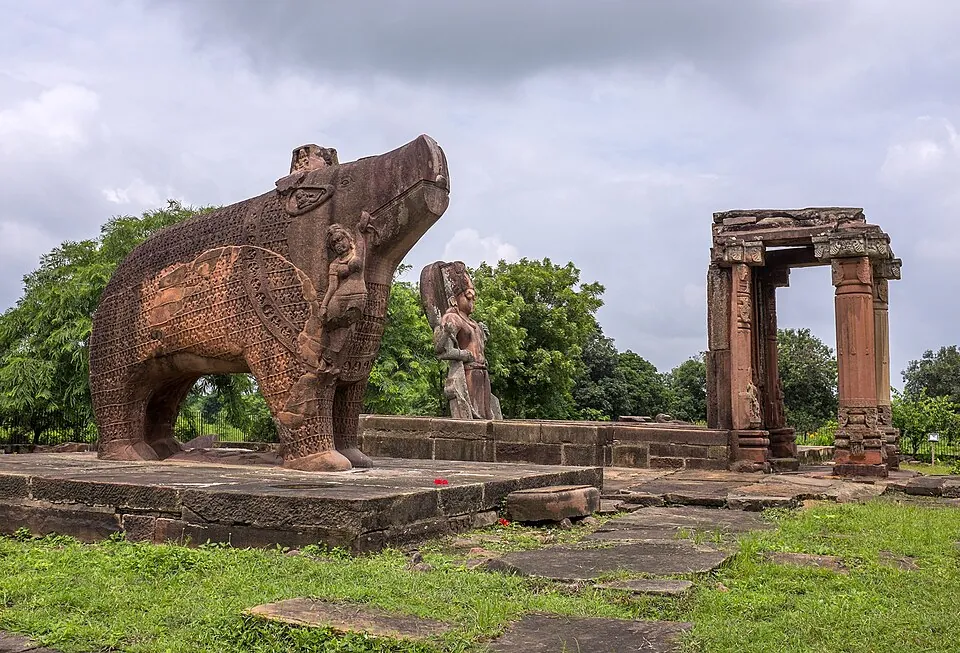
Eran, Gupta-Age Mint Town and Home of the Great Boar
Eraṇa · एरण
Eran, in Madhya Pradesh, was an ancient mint town and administrative centre of the Gupta Empire. Its fifth- and sixth-century temples include a colossal stone boar, and its inscriptions are key evidence for reconstructing Gupta chronology. Its inscriptions help historians date the Gupta rulers.
Eran is an old town and excavation site in Madhya Pradesh's Sagar district. Known in antiquity as Erakina or Airikina, it served as the headquarters of an administrative district of the Gupta Empire and was also a mint, as the many varied coins unearthed there show. The site preserves temples and monuments of the fifth and sixth centuries, the best known being the colossal stone Varāha, a boar form of Viṣṇu, whose body is carved with rows of sages and scholars. Among the inscribed stones found at Eran is a pillar of Budhagupta dated to the year 484 or 485 CE, which is important for fixing the chronology of the Gupta rulers and their provincial governors. Other inscriptions record the later rise of the Hūṇa chieftain Toramāṇa, who left his own record on the boar's chest. For historians, Eran is a place where temple sculpture, epigraphy and numismatics meet, and it gives a clear picture of how the Gupta state worked at the district level in central India.