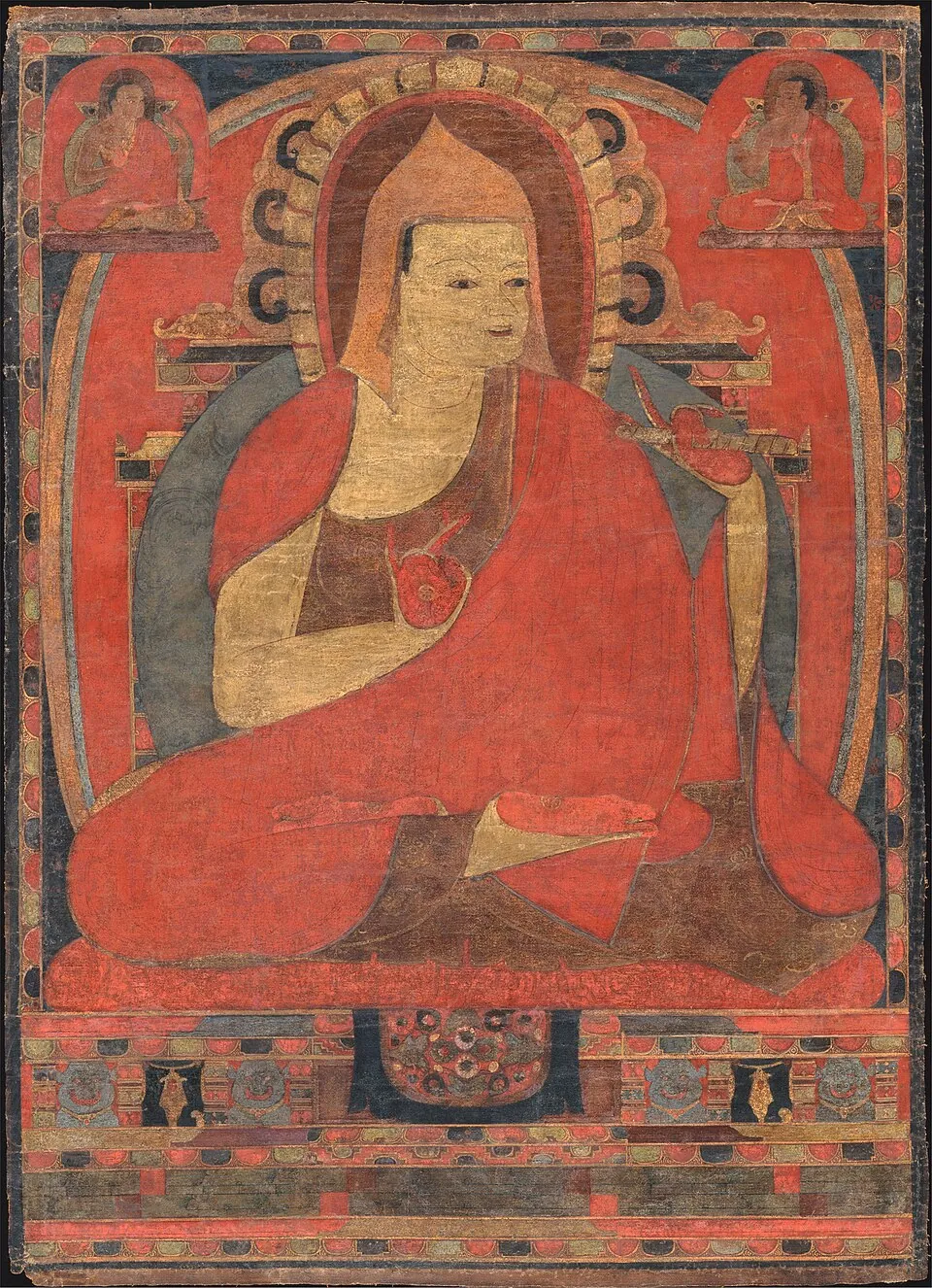
Atiśa Dīpaṃkara Revives Buddhism in Tibet
Atiśa Dīpaṃkara · अतीश दीपंकर
Atiśa Dīpaṃkara Śrījñāna, a Bengali Buddhist teacher associated with Vikramaśīla monastery, travelled to Sumatra and then to Tibet around 1040. With his chief disciple Dromtön he is counted as founder of the Kadam school of Tibetan Buddhism, which later fed into the Gelug order.
Atiśa, who lived from about 982 to 1054 CE, was a Buddhist teacher from Bengal. His scholarly career is generally linked to the monastery of Vikramaśīla in Bihar, where he became a leading figure. In the eleventh century he helped spread Mahāyāna and Vajrayāna teachings across Asia, journeying to Sumatra to study and later to Tibet, where he arrived around 1040 at the invitation of the western Tibetan court. His stay there shaped what is known as the later dissemination of Buddhism in the country. Together with his principal disciple Dromtön, Atiśa is regarded as the originator of the Kadam order, a New Translation lineage of Tibetan Buddhism that stressed monastic discipline, ethical practice and the gradual path to awakening. In the fourteenth century the Kadam lineage was displaced as an independent order by the Gelug school, which took over its teachings and absorbed its monasteries. Atiśa's writings and teaching method continued to influence Tibetan religious life long after, particularly through the graded-path literature, and he remains a respected figure in Bengal and Tibet alike.