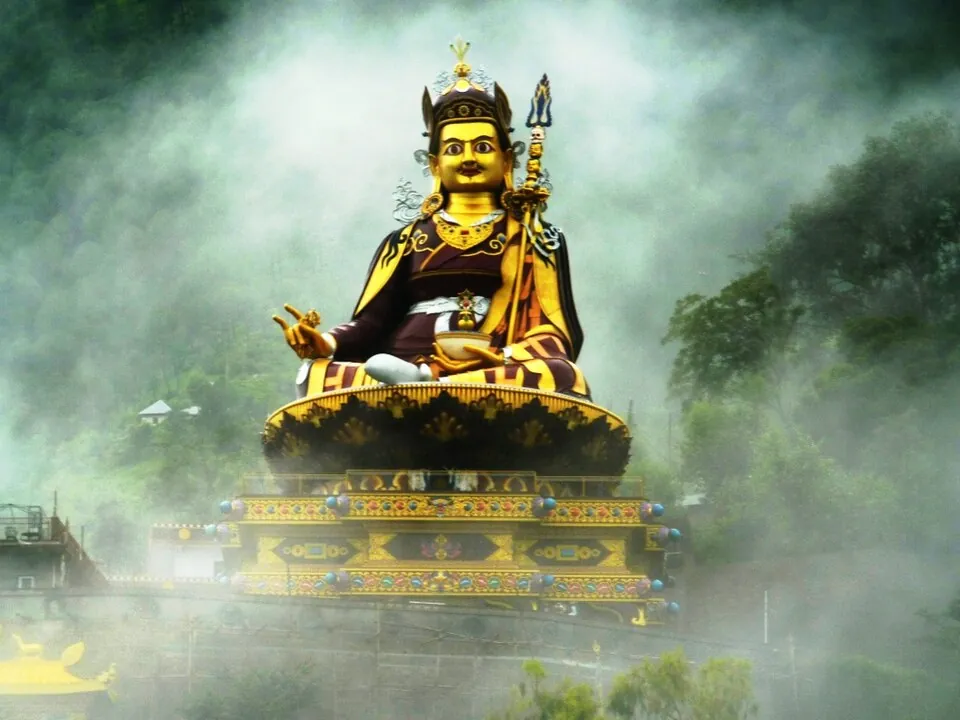
Padmasambhava, the Guru Who Brought Vajrayāna to Tibet
Padmasambhava · पद्मसम्भव
Padmasambhava, or Guru Rinpoche, is a semi-legendary tantric master of medieval India credited in Tibetan sources with establishing Vajrayāna Buddhism in Tibet in the 8th to 9th centuries. With King Trisong Detsen and Śāntarakṣita he is linked to Samye monastery and the translation of the Tibetan canon.
Padmasambhava, whose name means born from a lotus, is known in Tibet as Guru Rinpoche, the precious teacher. He is described as a semi-legendary tantric Buddhist adept from medieval India who, in the telling of devotional biographies, revealed the Vajrayāna fully in Tibet around the eighth and ninth centuries. Early Tibetan sources such as the Testament of Ba say he came to Tibet in the eighth century and designed Samye, the first Buddhist monastery in the country, during the reign of King Trisong Detsen. Along with the king and the abbot Śāntarakṣita, he is credited with the work of rendering Buddhist teachings and the commentaries upon them into Tibetan, creating the Tibetan canon. Later devotion regards him as an emanation of Śākyamuni Buddha, a figure foretold by the Buddha himself. Because much of his biography comes from later traditions, historians treat the details with caution, though his association with Samye and the early transmission of Buddhism to Tibet is well established in the sources. The date marks the period of his reported arrival.
Sources
- Padmasambhava Wikipedia · CC-BY-SA-4.0
- Q231582 Wikidata · CC0-1.0