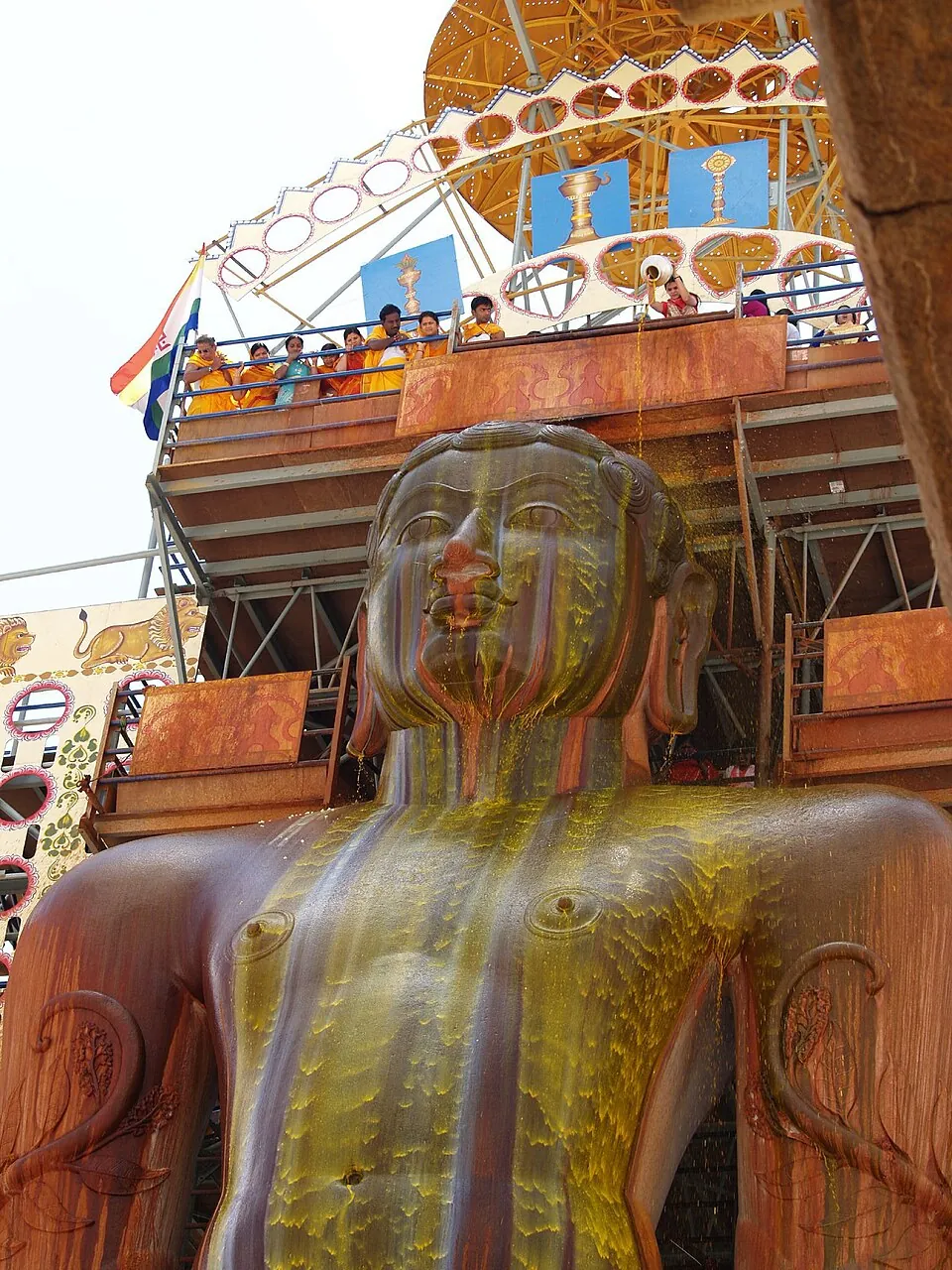
Mahāmastakābhiṣeka of Bāhubali at Shravanabelagola
Mahāmastakābhiṣeka · महामस्तकाभिषेक
The Mahāmastakābhiṣeka is the grand anointing of the colossal Bāhubali statue at Shravanabelagola in Karnataka, held about every twelve years. The ceremony tradition began in 981, and the 1981 celebration marked a thousand years since the statue was consecrated, a milestone celebrated across India.
Shravanabelagola in Karnataka is home to a monolithic statue of Bāhubali, also called Gommaṭeśvara, which stands seventeen and a half metres tall. Jains revere him as a liberated soul who renounced a kingdom for meditation. Every twelve years the figure is anointed from scaffolding with milk, curds, sandal paste, turmeric, saffron and flower petals in the Mahāmastakābhiṣeka, the grand consecration, which draws ascetics and very large crowds. Tradition counts the series from 981 CE, when the statue was installed by the minister Cāvuṇḍarāya under the Western Gaṅga kings. The ceremony held in 1981 was therefore celebrated as the thousandth anniversary and attracted nationwide attention. The most recent ceremony, in February 2018, is numbered as the eighty-eighth in the sequence, and the next is expected in 2030. The festival, led by the bhaṭṭāraka of the Shravanabelagola monastery, forms an integral part of the ancient and varied Jain tradition and is one of the largest gatherings of the community. The date used here is that of the 1981 festival.
Sources
- Mahamastakabhisheka Wikipedia · CC-BY-SA-4.0
- Q3632769 Wikidata · CC0-1.0