Gommateśvara Rises at Śravaṇabelagola
Śravaṇabelagola · श्रवणबेळगोळ
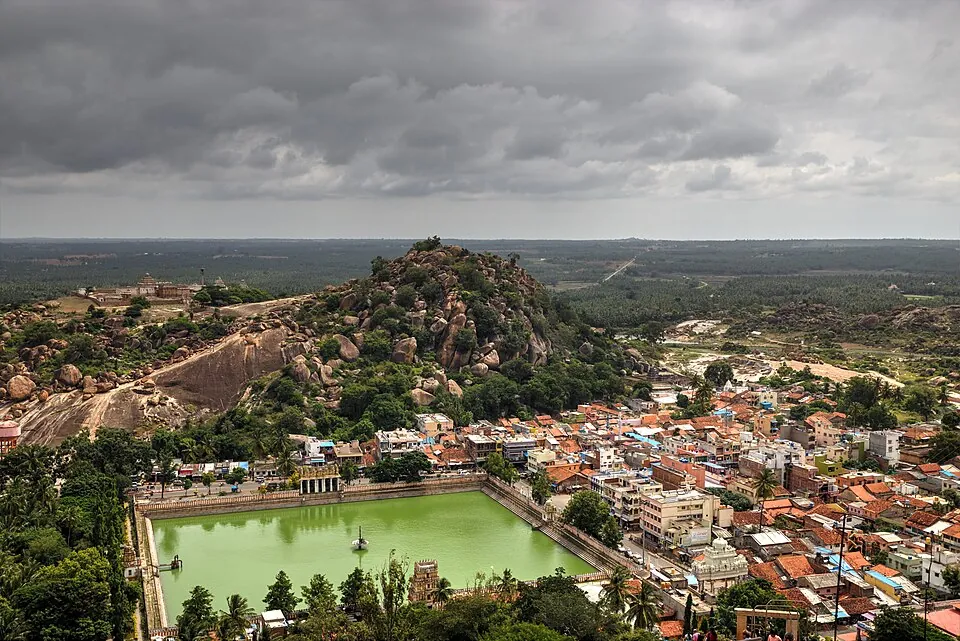
At Śravaṇabelagola in Karnataka, the colossal Gommateśvara Bāhubali statue was consecrated in 981 under Western Gaṅga patronage. The hill town became one of the foremost Jain pilgrimage sites, with basadis and inscriptions recording centuries of devotion. Tradition also links the hill of Candragiri with the death of Candragupta Maurya as a Jain ascetic.
Śravaṇabelagola, in Hassan district of Karnataka, is among the most important tīrthas of Jainism. Its great monolithic figure of Gommateśvara, also called Bāhubali, was set up in 981 under the patronage of the Western Gaṅga dynasty of Talakāḍ, and the period is regarded as a peak of Jain architecture and sculpture in the region. Around the statue stand temples known as basadis, among them the Akkana, Candragupta, Cāmuṇḍarāya and Pārśvanātha basadis, together with inscriptions that preserve records of donors, ascetics and rulers. The Archaeological Survey of India lists these monuments as protected. A separate tradition holds that Candragupta Maurya adopted the Jain monastic life and died on Candragiri hill in 298 BCE; this is a tradition preserved in Jain sources rather than a settled historical fact. The statue's consecration date, by contrast, rests on the Gaṅga-era record and anchors this entry.
Sources
- Shravanabelagola Wikipedia · CC-BY-SA-4.0
- Q1026193 Wikidata · CC0-1.0