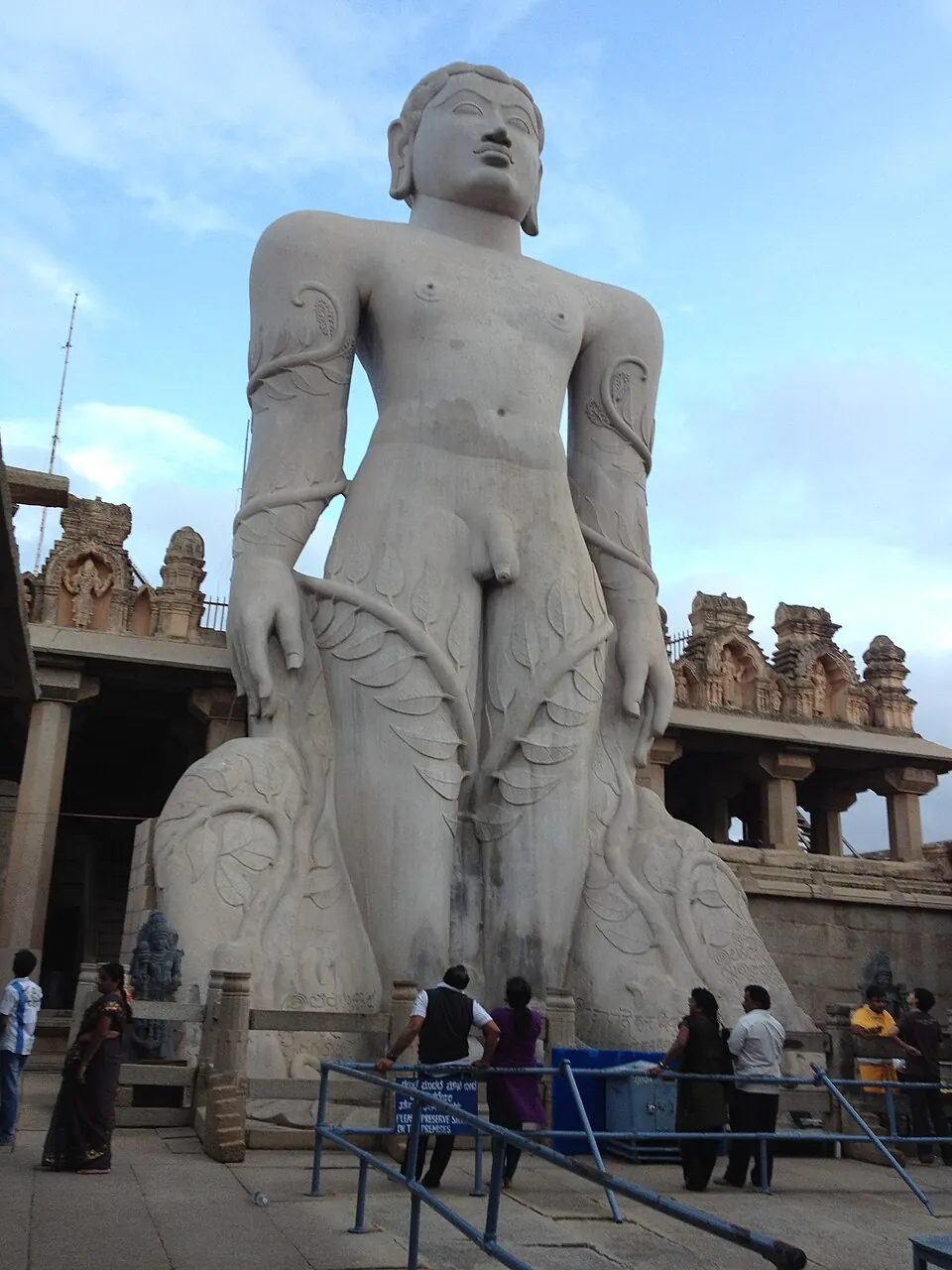
Bāhubali Colossus at Shravanabelagola
Bāhubalī · बाहुबली
Bāhubali, son of the first Jain tīrthaṅkara Ṛṣabhanātha, is revered in Jainism for twelve years of motionless meditation, during which creepers are said to have grown around his legs. His colossal statue, called Gommaṭeśvara, was consecrated at Shravanabelagola around 981.
In Jain tradition Bāhubali was a son of Ṛṣabhanātha, the first tīrthaṅkara, and a brother of the world-ruler Bharata. His name means the one with strong arms. Accounts say he stood in kāyotsarga, a rigid upright meditation posture, for twelve years, so still that climbing plants wound around his legs, and at the end of that period he reached kevala jñāna, perfect knowledge. He is also known as Kammaṭeśvara and Gommaṭeśvara, and the latter name is given to the great statue made in his honour. That monolithic figure at Shravanabelagola in Karnataka was set up around 981, in the period of the Western Gaṅga kings, and the date is widely cited. It remains the focus of the Mahāmastakābhiṣeka, a ceremony held at long intervals in which the statue is anointed. The date in this entry marks the consecration of the image, an event with historical support. The life of Bāhubali himself belongs to Jain sacred narrative and is not dated here.