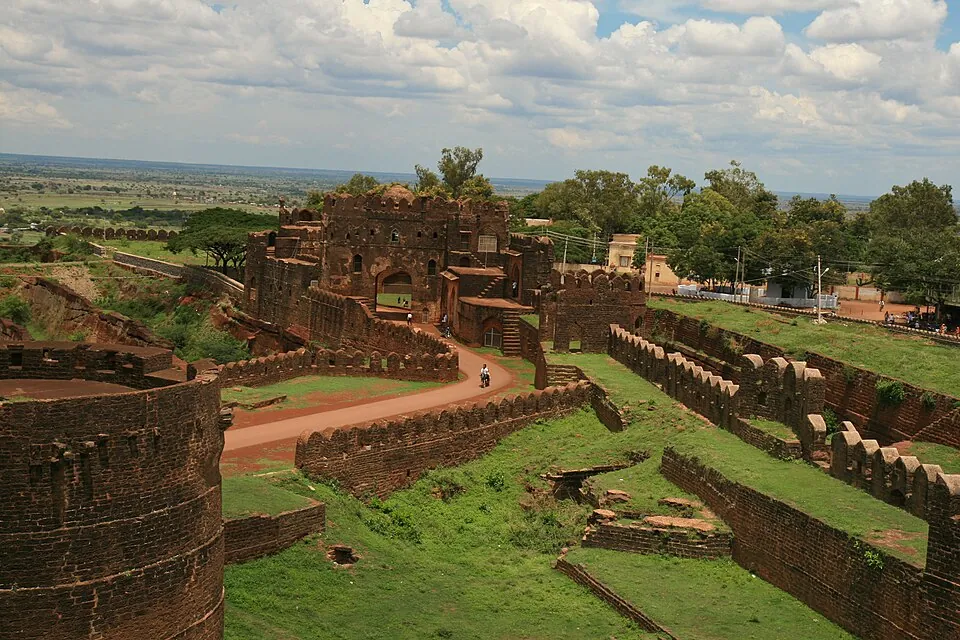
Bidar Fort and the Bahmanī Capital
In 1427 Sultan Aḥmad Shāh I of the Bahmanī dynasty moved his capital from Gulbarga to Bidar and built a fort with more than thirty monuments. The complex saw the rise and division of the Deccan sultanates and later later fell to the Barīd Shāhīs, the Ādil Shāhīs and finally the Mughals.
Bidar Fort stands in the old city of Bidar in Karnataka. Sultan Aḥmad Shāh I of the Bahmanī dynasty shifted his capital there from Gulbarga in 1427 and had the fort constructed along with a series of Islamic monuments, so that more than thirty of them now stand within the walls. The complex has seen the rise and fall of the Bahmanī dynasty, the separation of the Deccan into five sultanates, the seizure of the fort first by the Barīd Shāhīs, then by the Ādil Shāhīs, and finally by the Mughals. Its architecture reflects Persian and Deccani influence, with palaces, mosques and gateways facing the plateau. In 2014 UNESCO placed it on its tentative list for World Heritage status, in a group called Monuments and Forts of the Deccan Sultanate. For historians the fort is a record of the political culture of the medieval Deccan, where Islamic courts, trade, and the older regional traditions of the south met, and it remains a key site for understanding Bahmanī urbanism and defence.
Sources
- Bidar Fort Wikipedia · CC-BY-SA-4.0
- Q3814353 Wikidata · CC0-1.0