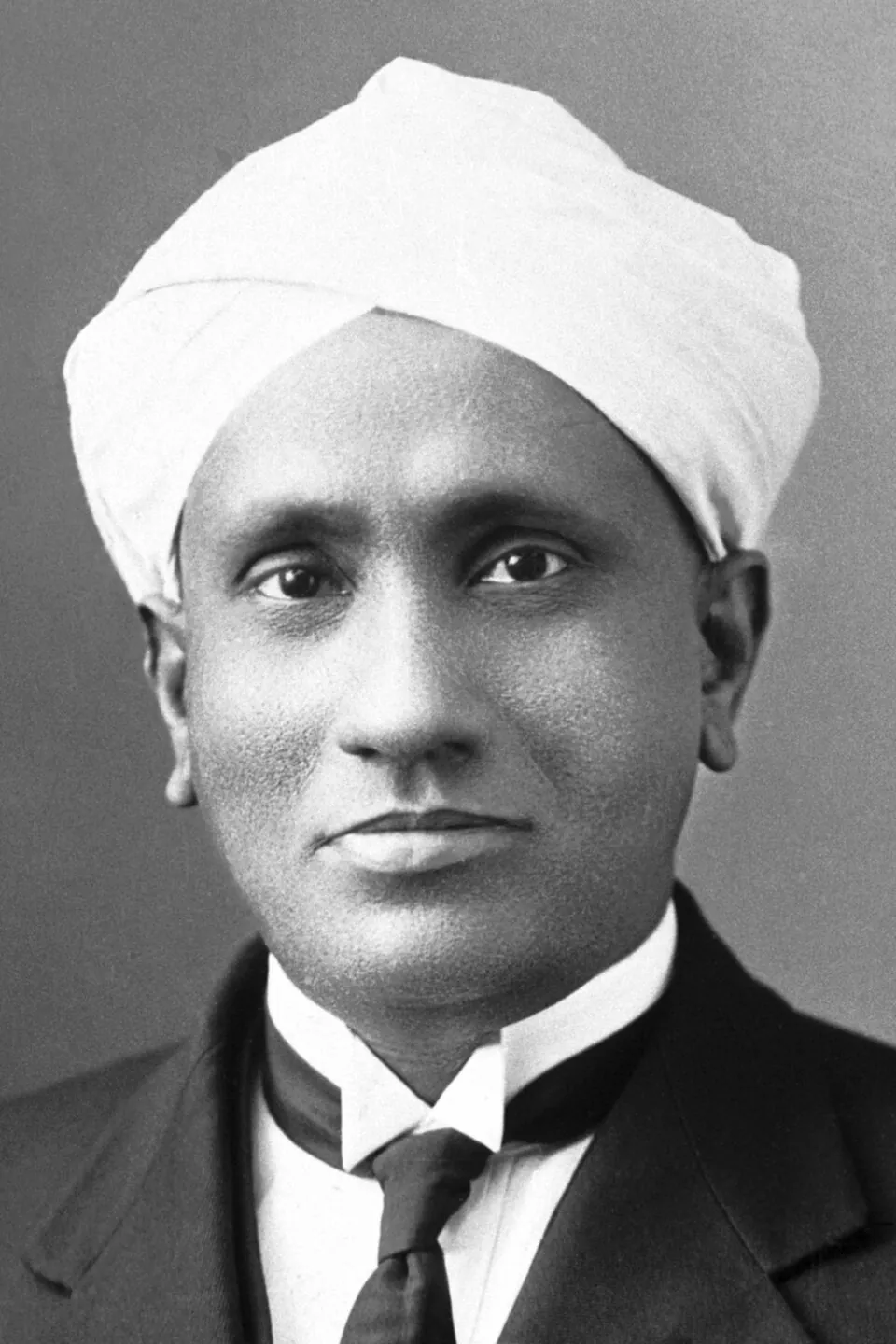
Raman Discovers Modified Light Scattering
In 1928 C. V. Raman and K. S. Krishnan observed that light passing through transparent matter emerges with a changed wavelength. The Raman effect won Raman the 1930 Nobel Prize in Physics, the first science Nobel awarded to an Asian scientist, and India now marks the discovery on National Science Day.
Chandrasekhara Venkata Raman, born in Tamil Nadu in 1888, was a physicist who did his best-known research in Calcutta, at a Bengal institute founded for science. With his student K. S. Krishnan he used a spectrograph to study what happens when light passes through a transparent substance. In February 1928 they saw that part of the scattered light had a different wavelength from the incoming beam, a form of scattering they first called modified scattering. It became known as the Raman effect. The discovery gave scientists a powerful way to probe molecular structure, because the shift in wavelength reveals vibrations inside a material, and it later became the basis of Raman spectroscopy used widely in chemistry, medicine and materials science. The Nobel Prize in Physics came to Raman in 1930, making him the first Asian and the first non-white person to win it in that field. India celebrates National Science Day on 28 February in memory of the discovery. Raman later founded the Raman Research Institute in Bangalore and died in 1970.
Sources
- C. V. Raman Wikipedia · CC-BY-SA-4.0
- Q60429 Wikidata · CC0-1.0