India's Economy Under Company and Crown
From Plassey in 1757 India's economy was reshaped by Company and then Crown rule. Once a major manufacturing and trading centre, it saw heavy debate over deindustrialisation and shrinking global share, which historians continue to argue about in terms of cause and scale.
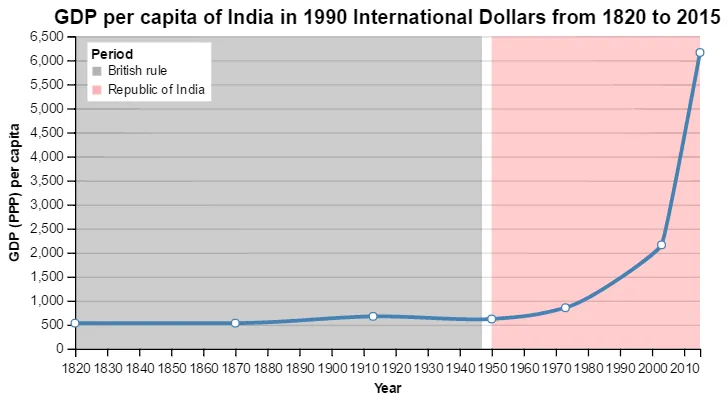
India's economic story reaches far back, from the agriculture and crafts of the Indus cities to a long medieval record of per-capita growth. Angus Maddison estimated that India and its neighbouring regions produced a large share of world output for most of the first millennium, and that the Mughal realm under Aurangzeb accounted for about a quarter of global production in the early eighteenth century. Until then the subcontinent was among the leading manufacturing and trading areas of the world, particularly for textiles, a pattern some historians call proto-industrialisation. After the Company's victory at Plassey in 1757 the political setting changed. Revenue systems, trade rules and, later, the arrival of cheap factory goods from Britain altered older patterns, and economists such as Jeffrey Williamson argue that the subcontinent deindustrialised during the colonial period. Others stress rising commercial agriculture, railways and uneven regional outcomes. The debate over causes, from colonial policy to technology and global markets, remains alive. This entry uses 1757 only as a conventional opening for the period under discussion.
Sources
- Economic history of India Wikipedia · CC-BY-SA-4.0
- Q3346404 Wikidata · CC0-1.0