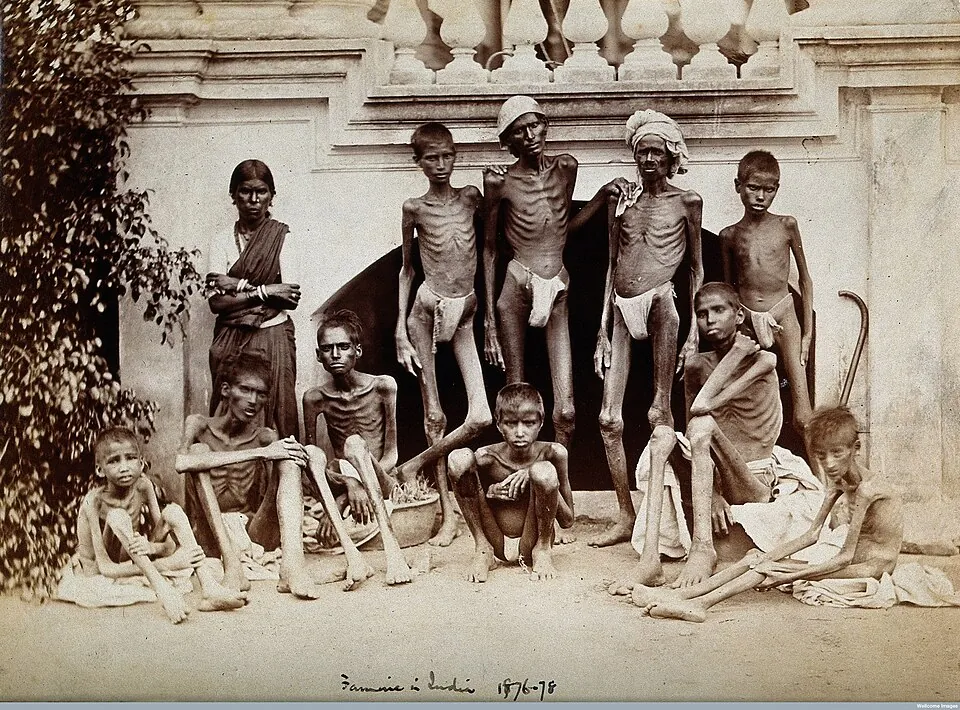
The Great Famine of 1876–78
The Great Famine of 1876 to 1878 followed an intense drought and crop failure on the Deccan plateau and spread across Madras, Bombay, Mysore, Hyderabad and northward. It touched about 58 million people and caused an estimated five to ten million excess deaths.
The Great Famine of 1876–1878, also called the Southern India famine or Madras famine of 1877, began in 1876 when a severe drought destroyed crops across the Deccan plateau. It struck the British-administered presidencies of Madras and Bombay, Punjab, and also the native states of Mysore and Hyderabad, and during 1877 hardship extended north, taking in parts of the Central Provinces as well as the North-Western Provinces. In all, an area of about 670,000 square kilometres was affected, with some 58.5 million people in distress. Estimates of excess mortality range from about 5.6 million to 9.6 million, and a careful recent demographic study arrived at roughly 8.2 million deaths. It is regarded as one of the deadliest famines of the colonial period, and the scale of loss prompted long-lasting debate about relief policy, grain trade, taxation and the responsibilities of the Crown administration. The later Famine Commission of 1880 grew out of its aftermath. The famine shaped public finance, railway policy and nationalist critique of British rule in the following decades.
Sources
- Great Famine of 1876–1878 Wikipedia · CC-BY-SA-4.0
- Q3534685 Wikidata · CC0-1.0