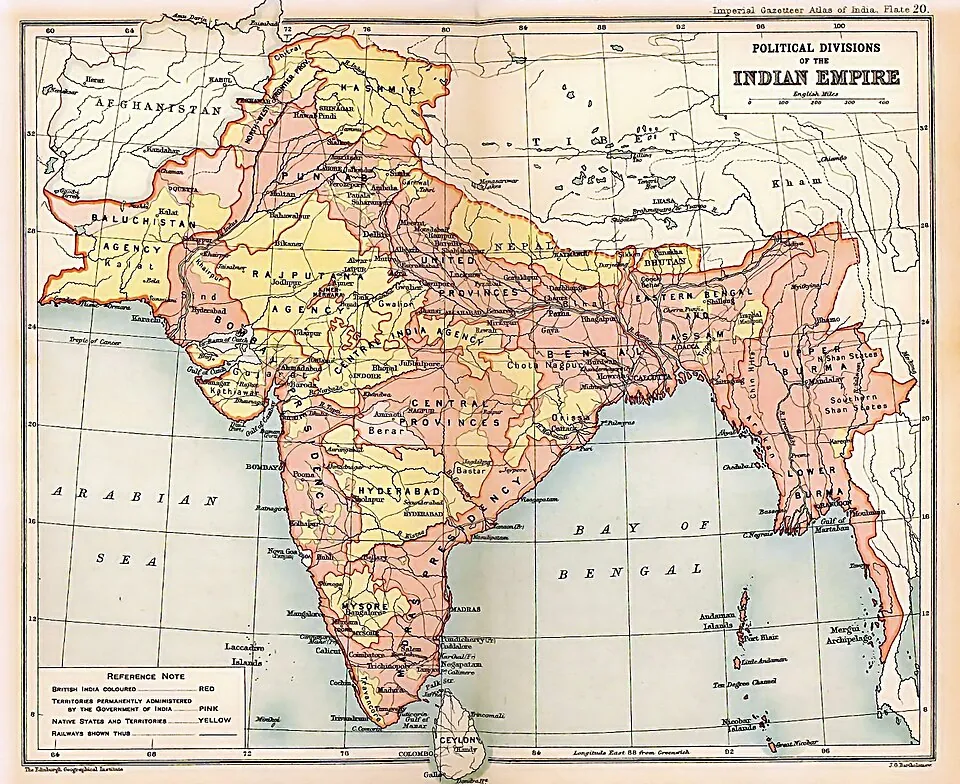
The Famine of 1899-1900 Strikes Western India
The famine of 1899-1900 followed the failure of the 1899 monsoon and affected about 59.5 million people across 476,000 square miles of western and central India. Mortality was especially high in the Bombay Presidency, and estimates of total deaths range from one million to 4.5 million.
The monsoon failed over western and central India in the summer of 1899, and the rainfall shortage that followed was severe even by the standards of earlier droughts. The distress spread over roughly 476,000 square miles and touched around 59.5 million people. The worst-hit areas were Berar and the Central Provinces, the Bombay Presidency, Ajmer-Merwara and the Hissar district of Punjab, while princely states such as those of Rajputana, Central India, Hyderabad and Kathiawar also suffered. Many communities had barely recovered from the previous famine of 1896 to 1897. Widespread crop failure meant that trade between regions could not be counted on to steady food prices. In the Bombay Presidency alone 462,000 deaths were recorded, and the Deccan had about 166,000, giving the presidency the highest death rate of any famine or scarcity it faced between 1876 and 1919. A 1908 imperial gazetteer reckoned about a million starvation-related deaths in British districts, and later estimates range up to 4.5 million. Fodder shortages killed millions of cattle as well. The events later fed arguments about colonial relief policy.
Sources
- Indian famine of 1899–1900 Wikipedia · CC-BY-SA-4.0
- Q6022234 Wikidata · CC0-1.0