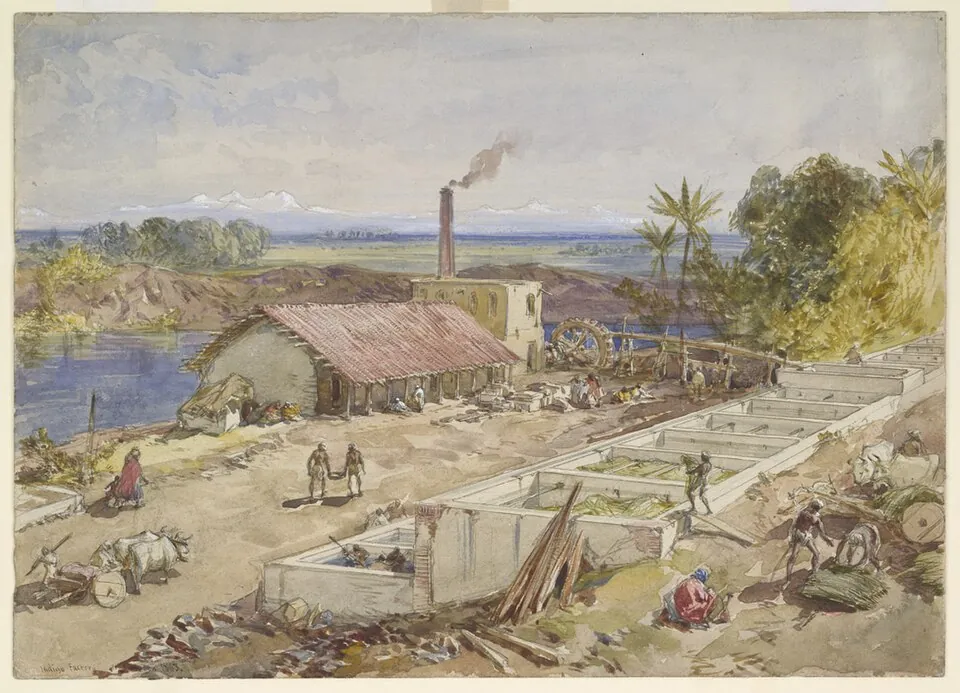
The Indigo Revolt of Bengal
Nīl Bidroha · নীল বিদ্রোহ
In 1859 thousands of Bengal's peasant cultivators refused to grow indigo for European planters in a movement known as Nīl Bidroha. Led by village headmen and substantial ryots, it spread across districts and ended after an Indigo Commission proposed reforms in 1860.
The Indigo Revolt, called Nīl Bidroha in Bengali, was a peasant uprising against the European planters who compelled farmers to cultivate indigo. It broke out in Bengal in 1859 and lasted more than a year. In the summer of 1859 thousands of ryots declined to plant the crop, a show of collective resolve that became one of the most notable peasant movements in Indian history. The village headmen, or mandals, and prosperous ryots provided most of the leadership, and at times former employees of the planters, such as gomastas or dewans at indigo factories, helped organise the cultivators. The movement began in Nadia district, led by Digambar Biswas and Bishnucharan Biswas, and spread to other districts through the 1860s, with attacks on factories and planters in many places. In 1860 the government set up the Indigo Commission, which proposed reforms of a system that was exploitative by design, and the revolt subsided. It also found expression in literature, notably Dinabandhu Mitra's play Nil Darpan, and it is often cited as an early example of organised rural resistance to colonial economic power.
Sources
- Indigo revolt Wikipedia · CC-BY-SA-4.0
- Q1661404 Wikidata · CC0-1.0