Jones Hints at a Shared Indo-European Ancestry
In 1786 the British orientalist William Jones argued in Calcutta that Sanskrit, Greek and Latin sprang from a common source. His idea fed the nineteenth-century reconstruction of Proto-Indo-European, a hypothetical ancestral language whose speakers are usually dated to roughly 4500 to 2500 BCE.
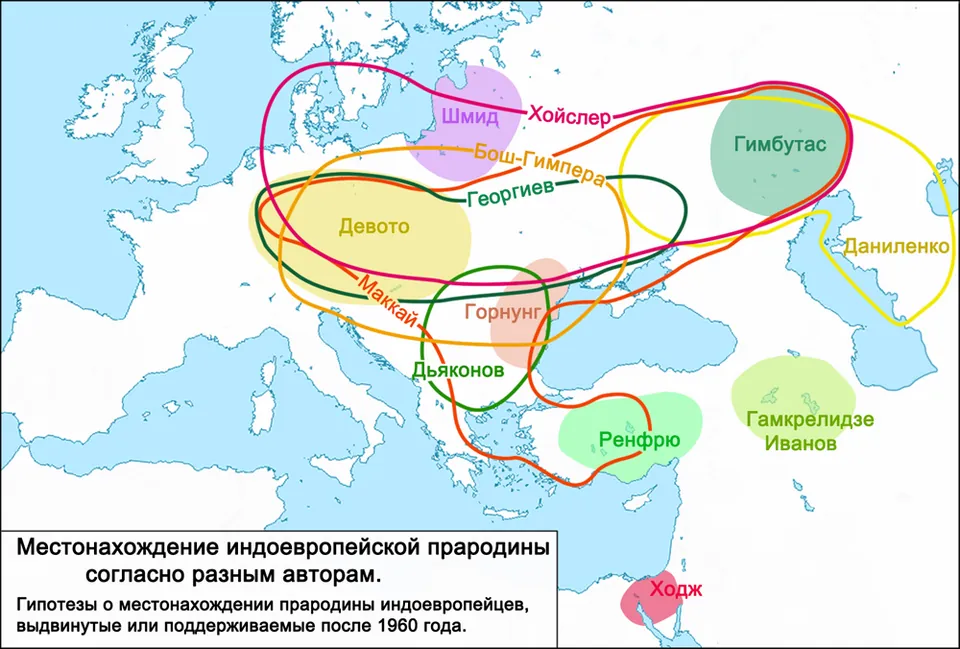
In February 1786, William Jones, a British judge and scholar in Calcutta, told the Asiatic Society that Sanskrit, Greek and Latin showed such deep similarity in roots and grammar that they must have come from a shared older source, perhaps no longer spoken. The remark helped launch comparative philology. Over the nineteenth century linguists devoted much effort to reconstructing that ancestor, now called Proto-Indo-European, and in the process they developed techniques such as the comparative method that still guide historical linguistics. No direct record of the language has been found; its features are inferred from its daughter languages. It is usually supposed to have been spoken between about 4500 and 2500 BCE, although some estimates reach more than a thousand years later, and the leading proposal places its homeland in the Pontic-Caspian steppe. Questions about where its speakers lived and how their descendants reached South Asia remain subjects of scholarly debate, separate from the Indian tradition's own accounts of its origins.
Sources
- Proto-Indo-European language Wikipedia · CC-BY-SA-4.0
- Q37178 Wikidata · CC0-1.0