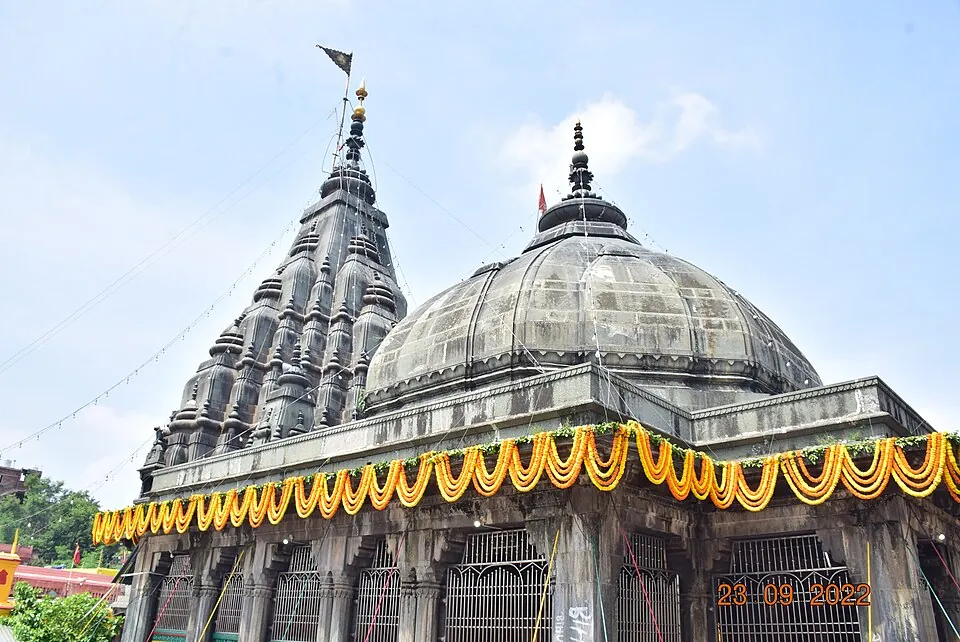
Ahilyabai Holkar Rebuilds the Vishnupad Temple at Gaya
Viṣṇupada Mandira · विष्णुपद मंदिर
The Vishnupad Temple at Gaya, Bihar, honours a footprint of Viṣṇu set in basalt and is the focus of śrāddha rites. The present structure dates from about 1787, when Ahilyabai Holkar of Indore sponsored its reconstruction beside the Phalgu river.
The Vishnupad Temple stands on the bank of the Phalgu river in Gaya, Bihar, and is dedicated to Viṣṇu. Tradition holds that it rests where Viṣṇu defeated the demon Gayasura and pinned him beneath the ground. In the sanctum is a footprint about forty centimetres long, cut into a block of basalt called Dharmaśilā, which is said to mark where the god stepped on the demon's chest. The temple is the main centre for śrāddha rites in Gaya, the offerings for departed ancestors that draw pilgrims from across India. Its hereditary priests are the Gayawal brāhmaṇas, also called the Pandas of Gaya. The building seen today was erected in the late eighteenth century, with the date around 1787 connected to the patronage of Ahilyabai Holkar, the Maratha ruler of Indore, who funded many temple works across the subcontinent. A gold flag weighing about fifty kilograms, given by a devotee, crowns the structure. The temple's narrative of Gayasura belongs to sacred tradition, while the reconstruction is a documented event of the Maratha period.
Sources
- Vishnupad Temple Wikipedia · CC-BY-SA-4.0
- Q7935996 Wikidata · CC0-1.0