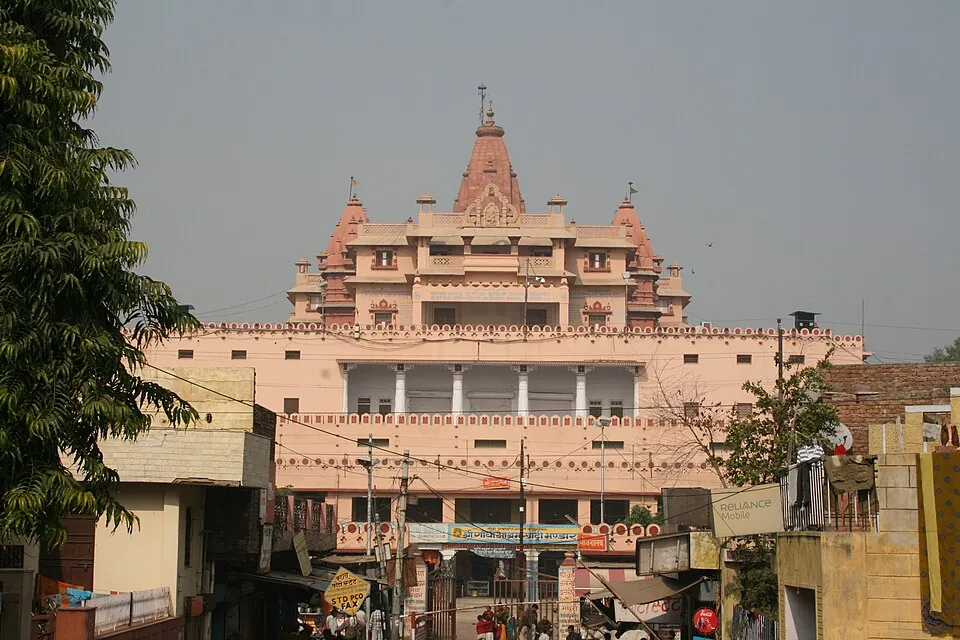
Keśavadeva Temple Rebuilt at Mathura
Keśavadeva Mandira · केशवदेव मंदिर
Mathura's Keśavadeva temple stood at a site revered as Kṛṣṇa's birthplace. Veer Singh Deo Bundela built a grand temple there around 1618; Aurangzeb ordered it destroyed in 1670 and a mosque raised on the spot. A new temple complex was later built next to it.
The Krishna Janmasthan complex in Mathura marks the place that devotees hold to be Kṛṣṇa's birthplace, with its inner sanctum known as the Garbha Gṛha. Excavations show that the area has had religious significance since about the sixth century BCE, and temples there were destroyed and rebuilt more than once. In about 1618 the Bundela chieftain Veer Singh Deo, an ally of the Mughal emperor Jahāngīr, built a grand Keśavadeva temple, which travellers of the time described as extraordinarily lofty and richly decorated. In 1670 Aurangzeb had it demolished, and he built the Shahi Idgah mosque on the site, which still stands. In the twentieth century a new temple complex was constructed beside the mosque, with funds from industrial donors, and it includes the Keśavadeva temple, the Garbha Gṛha and the Bhāgavata Bhavana. The place remains a major centre of Vaiṣṇava pilgrimage and is also the subject of continuing legal and public debate. The date given here is the building of the seventeenth-century temple.
Sources
- Krishna Janmasthan Temple Complex Wikipedia · CC-BY-SA-4.0
- Q6394892 Wikidata · CC0-1.0