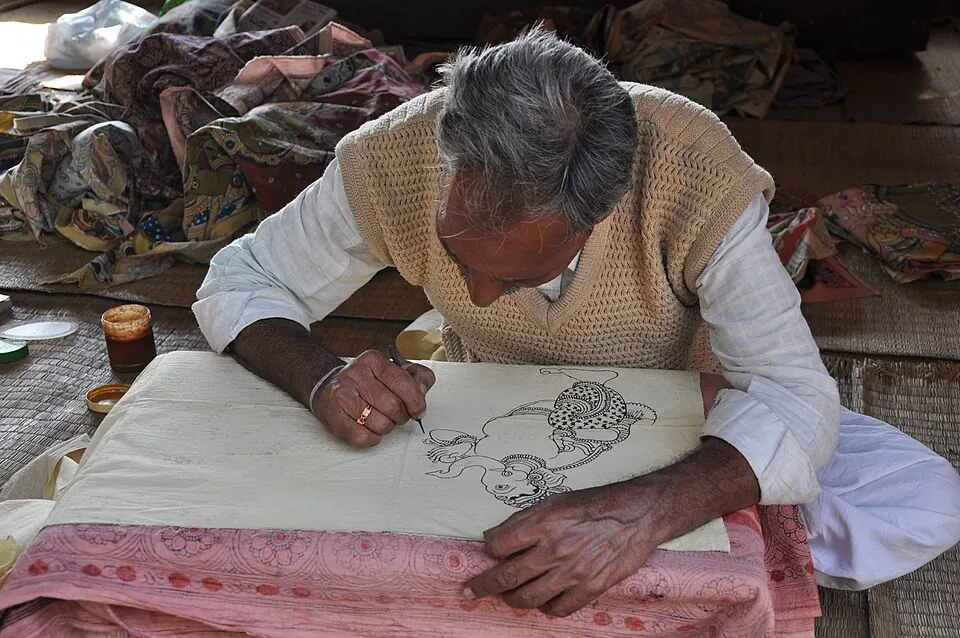
Kalamkari Painting at Srikalahasti
Kalamkāri · कलमकारी
Kalamkari is a textile art of Andhra Pradesh in which natural dyes are applied to cloth through many stages of preparation. Two styles are recognised: freehand pen painting at Srikalahasti and block printing at Machilipatnam. The art grew prominent under Vijayanagara patronage, and the Srikalahasti tradition is closely tied to temple imagery.
Kalamkari, sometimes spelled qalamkari, is a form of textile decoration from Andhra Pradesh. The word combines Persian-derived and Indic elements meaning pen and craft, a name said to have been given under Deccan Muslim rulers, while earlier the tradition was known as pattachitra. Every colour comes from natural dyes, and a finished cloth passes through roughly twenty-three steps of treatment, painting and washing. Two principal styles exist. At Srikalahasti, artists draw freehand with a bamboo pen and fill the outlines with colour by hand; at Machilipatnam, carved wooden blocks are used for printing. The Srikalahasti manner developed around temples and shaped religious identity, producing hangings and scrolls that show deities and scenes from sacred stories. Kalamkari gained wide popularity across South India in the Vijayanagara period. Both styles later received protection as Geographical Indications, the Srikalahasti one in 2005 and Machilipatnam in 2008. The date given here is an approximate marker for the long-established temple craft rather than a founding year.