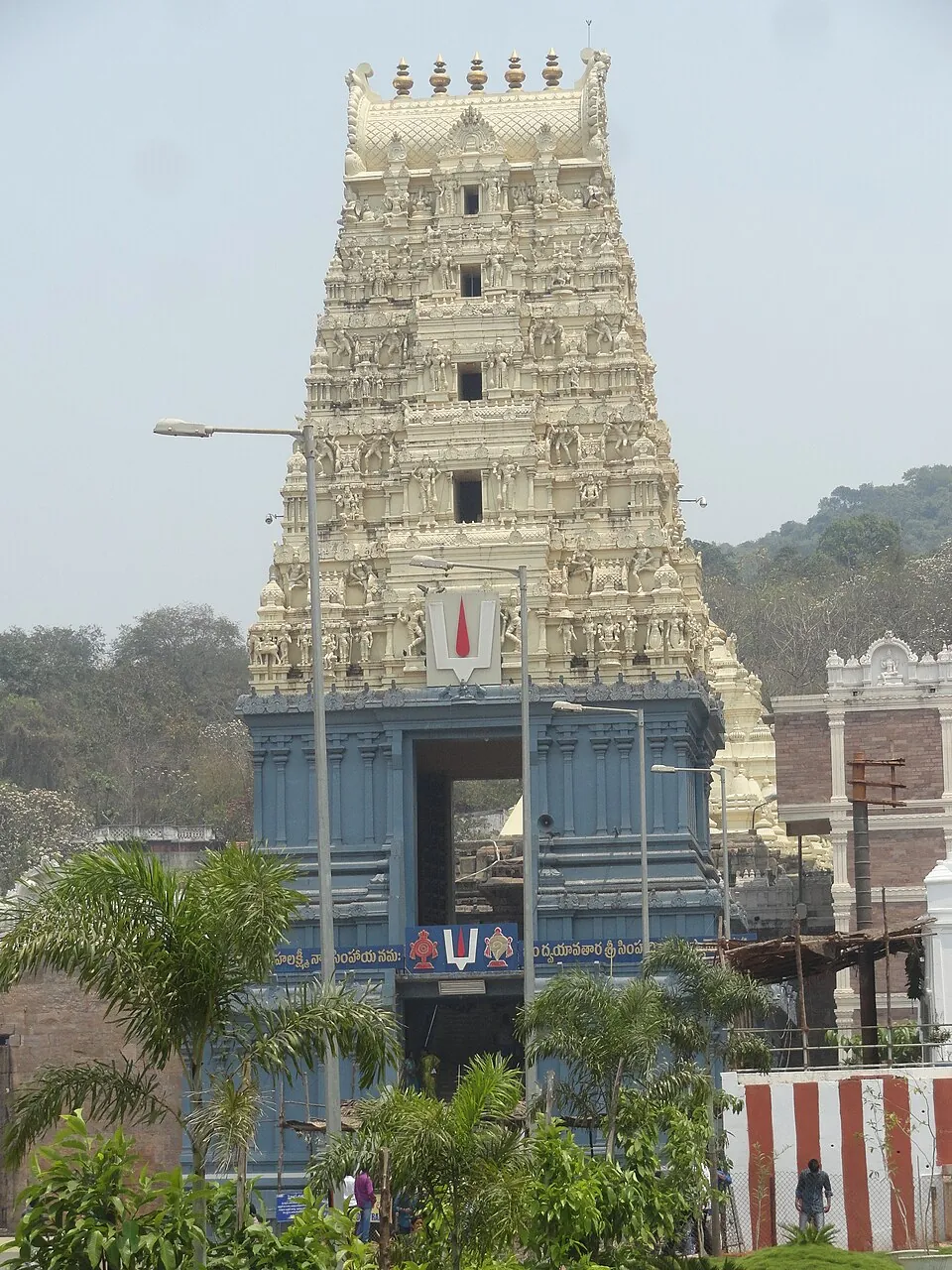
Varāha Narasiṃha Shrine on Simhachalam Hill
Siṃhācalam · सिंहाचलम
The Simhachalam temple near Visakhapatnam enshrines Viṣṇu as Varāha Narasiṃha, a combined boar and man-lion form. Inscriptions record patronage from the late eleventh century, and the present Kalinga-style building took shape under the Eastern Gaṅga kings in the thirteenth century, remaining a major Vaishnava pilgrimage site.
On a hill rising about three hundred metres above the coast near Visakhapatnam stands the shrine of Varāha Lakshmi Narasiṃha. Its presiding image combines two incarnations of Viṣṇu, and for most of the year the figure is wrapped in thick sandalwood paste, so that it looks like a simple linga. Only on Akshaya Tritiya is the paste removed and the true form seen. Temple legend links the site to the rescue of the devotee Prahlāda. The earliest dated inscriptions, including a Chola-era record of 1098, show that the shrine was already an established centre of worship by the close of the eleventh century. The existing structure was raised in the thirteenth century under the Eastern Gaṅga king Narasiṃha Deva I, whose son Bhānudeva I is remembered as consecrating it in 1268. Its carving belongs to the Kalinga architectural tradition of Odisha and the northern Andhra coast, and the temple later drew generous gifts from Vijayanagara rulers. It remains one of the major Vaishnava pilgrimage places of Andhra Pradesh.
Sources
- Varaha Lakshmi Narasimha temple, Simhachalam Wikipedia · CC-BY-SA-4.0
- Q2620389 Wikidata · CC0-1.0