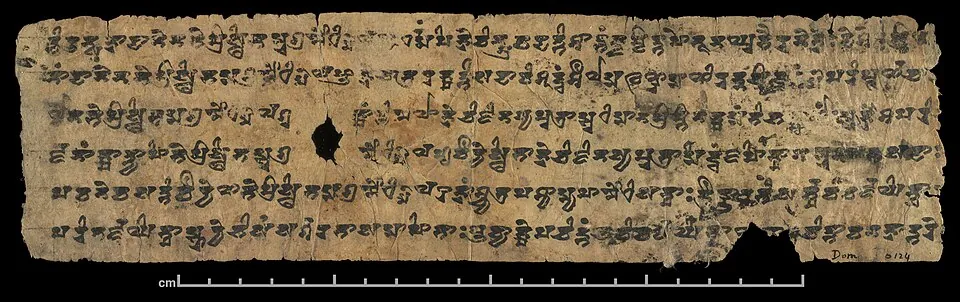
The Lotus Sūtra, a Pillar of Mahāyāna Buddhism
Saddharmapuṇḍarīka Sūtra · सद्धर्मपुण्डरीक सूत्र
The Lotus Sūtra, or Saddharma Puṇḍarīka, is one of the most influential Mahāyāna scriptures. Composed in Sanskrit in India in roughly the early centuries CE, it became the foundation text of Tiantai, Tendai, Nichiren and Cheontae schools and shaped Chan and Zen across East Asia.
The Saddharma Puṇḍarīka Sūtra, the Discourse of the White Lotus of the Good Law, is among the most venerated texts of Mahāyāna Buddhism. It was composed in India, in Sanskrit, in the early centuries of the Common Era, and the date used here is an approximate historical marker for that period; its exact stages of composition are debated. The sūtra teaches that the many paths and vehicles taught by the Buddha are skilful means leading to a single buddhahood, and it illustrates the idea with parables such as the burning house. Translated into Chinese several times, it became the principal scripture on which the Tiantai school was built, and from there the Japanese Tendai and Nichiren schools, the Korean Cheontae and the Vietnamese Thiên Thai arose. It also left a mark on other East Asian traditions including Chan and Zen. Scholars of Buddhism describe it as, for many East Asian Buddhists, the fullest statement of the Buddha's teaching, which explains its long life in devotion, art and commentary.
Sources
- Lotus Sutra Wikipedia · CC-BY-SA-4.0
- Q861212 Wikidata · CC0-1.0