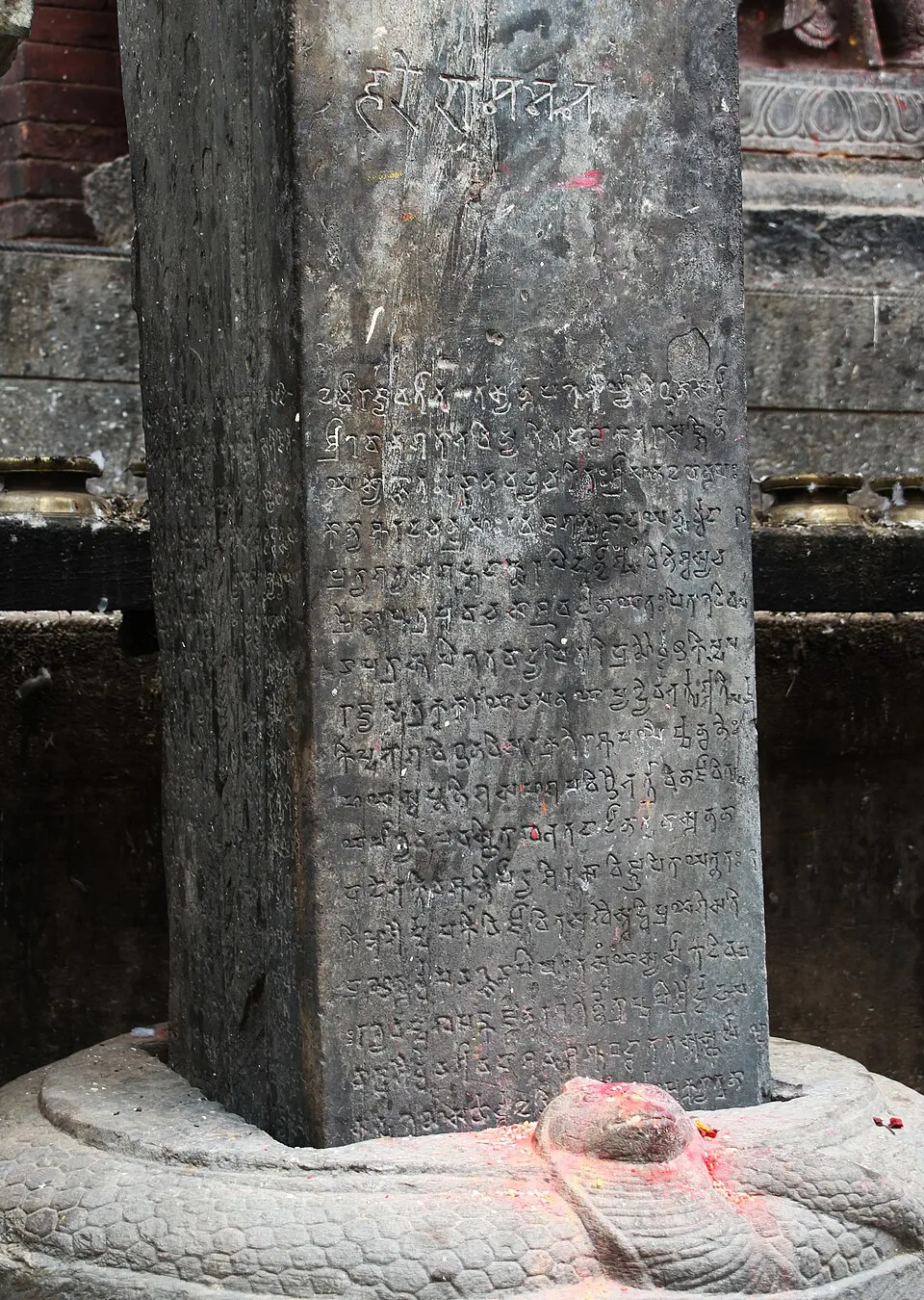
Mānadeva Rules Licchavi Nepal
King Mānadeva of the Licchavi dynasty of Nepal, who lived from 464 to 505, was the son of Dharmadeva. He subdued feudal chiefs in the east and west, conquered Mallapuri, issued coins called Mānaṅka and built the Managṛha palace, which later became an administrative centre of the Licchavi kings.
Mānadeva, whose name is also spelled Mandev or Mandeva, was a king of the Licchavi dynasty in Nepal, remembered for the years 464 to 505 CE. He was the son of Dharmadeva, the grandson of Śaṅkaradeva and the great-grandson of Vṛṣadeva. According to the account used here, he put down the feudal chiefs of the eastern and western parts of his realm and conquered a place called Mallapuri, strengthening royal control. He minted coins known as Mānaṅka, an early sign of an organised monetary system under the Licchavis. For his own residence he constructed a palace, the Managṛha, which afterwards grew into a centre from which the Licchavi kings administered the kingdom. His reign falls in the Gupta age, when the Himalayan kingdoms were closely connected with the plains through trade and culture. Scholars give 464 and 505 as year-level estimates and not exact dates, so the start year of the span marks the beginning of his life, and the exact length of his rule should be treated with caution.