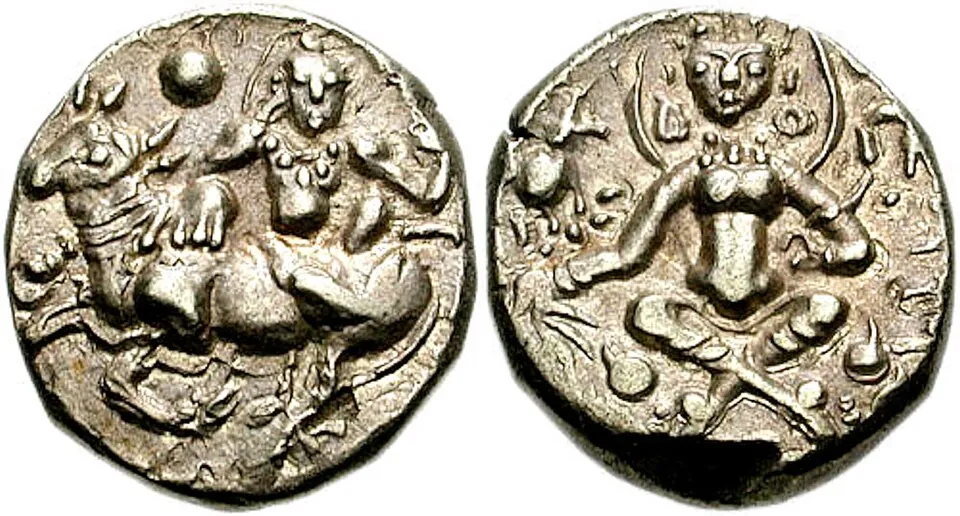
Śaśāṅka, King of Gauda
Śaśāṅka · शशांक
Śaśāṅka ruled the Gauda kingdom of Bengal in the early seventh century, with his capital at Karnasuvarna. He lived alongside both Harsha and the Kamarupa king Bhaskaravarman, and is also credited with starting the Bengali calendar. Estimates of his reign vary between roughly 590 and 636.
Śaśāṅka stands among the earliest major figures in Bengal's recorded history. He governed Gauda, a realm that emerged from the later Gupta political world and succeeded it in the east, and he ruled from Karnasuvarna. Historians disagree on the exact dates: one reckoning places his reign between 600 and 636, another between 590 and 625, giving a broad span from about 593 to 636. He was a contemporary of Harsha of Kanyakubja and Bhaskaravarman of Kamarupa, rulers with whom his kingdom was entangled in the politics of northern and eastern India. Popular tradition ascribes to him the creation of the Bengali calendar, an attribution that links his name to everyday time-keeping in the region. The start year used here is an approximate marker of the period, given the uncertainty in the sources, and reflects why he is usually treated as the first notable independent ruler of Bengal.