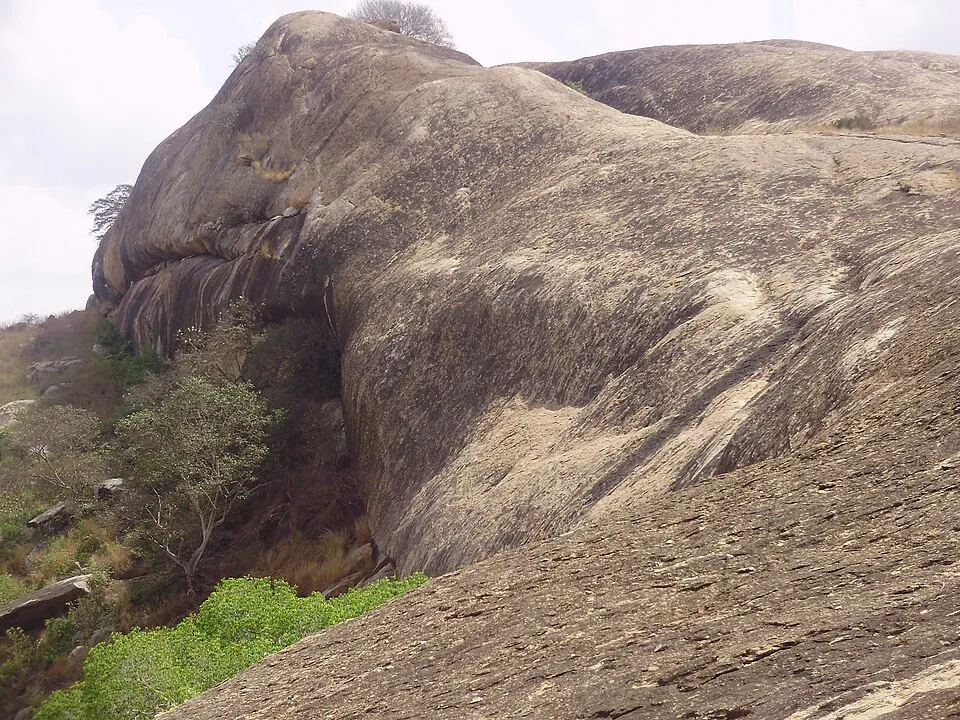
Sittanavasal Cave and Its Jain Frescoes
Cittaṉṉavāśal · सित्तन्नवासल
Sittanavasal, in Pudukkottai district of Tamil Nadu, is a rock-cut monastery of the Śramaṇa tradition, also called Arivar Koil, the temple of the Arihants. The complex is traditionally traced to the early centuries CE, and it preserves remains of seventh-century frescoes painted with vegetable and mineral colours.
Sittanavasal is a village in Pudukkottai district, Tamil Nadu, with a complex of caves linked to the Tamil Śramaṇa tradition. The name is a worn form of a Tamil phrase meaning abode of great saints. The main monument is a rock-cut monastery or shrine known as Arivar Koil, dedicated to the Arihants, the Jain ideal of liberated teachers. Its beginnings are traditionally placed around the second century, though the most celebrated surviving feature belongs to a later phase: remains of frescoes from about the seventh century. They were created by laying colour on a thin layer of wet lime plaster, using plant and mineral pigments of black, green, yellow, orange, blue and white. The paintings are counted among the early examples of Indian mural art in the south. The Archaeological Survey of India lists Sittanavasal as a must-see heritage site and as an Adarsh Smarak monument. The date here is the approximate period of the murals, not of the original excavation.
Sources
- Sittanavasal Cave Wikipedia · CC-BY-SA-4.0
- Q7532018 Wikidata · CC0-1.0