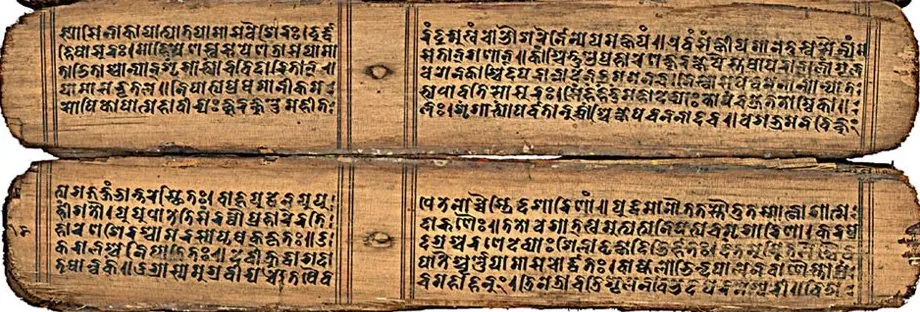
Mārkaṇḍeya Purāṇa and the Devī Māhātmya
Mārkaṇḍeya Purāṇa · मार्कण्डेय पुराण
The Mārkaṇḍeya Purāṇa is one of the eighteen major Purāṇas and is thought to be among the earliest. It is best known for containing the Devī Māhātmya, the oldest surviving treatise presenting the Goddess as supreme reality, which makes the work central to the Śākta tradition.
The Mārkaṇḍeya Purāṇa takes its name from the sage Mārkaṇḍeya, the central figure in two legends, one tied to Śiva and the other to Viṣṇu. Unlike many Purāṇas, it is not strongly sectarian and rarely stops to praise any single god. Scholars such as Ludo Rocher regard it as probably one of the oldest and most interesting works of its class. Its great distinction is the Devī Māhātmya, found in chapters 81 to 93 of the surviving 137, which is the earliest known treatise presenting the Goddess as ultimate reality and the maker of all things. Some Hindu communities rank this section alongside the Bhagavad Gītā in importance, and it is central to the devotional life of Śāktism, with its remarkable reverence for the feminine. Tradition says the Purāṇa had nine thousand verses; manuscripts now hold about 6,900, because some 2,100 verses are believed to have passed into the Devī Bhāgavatam. Beyond the Goddess material, the work ranges widely over social customs and symbols drawn from Vedic ideas and metaphysics. Its date is only broadly estimated.
Sources
- Markandeya Purana Wikipedia · CC-BY-SA-4.0
- Q2047126 Wikidata · CC0-1.0