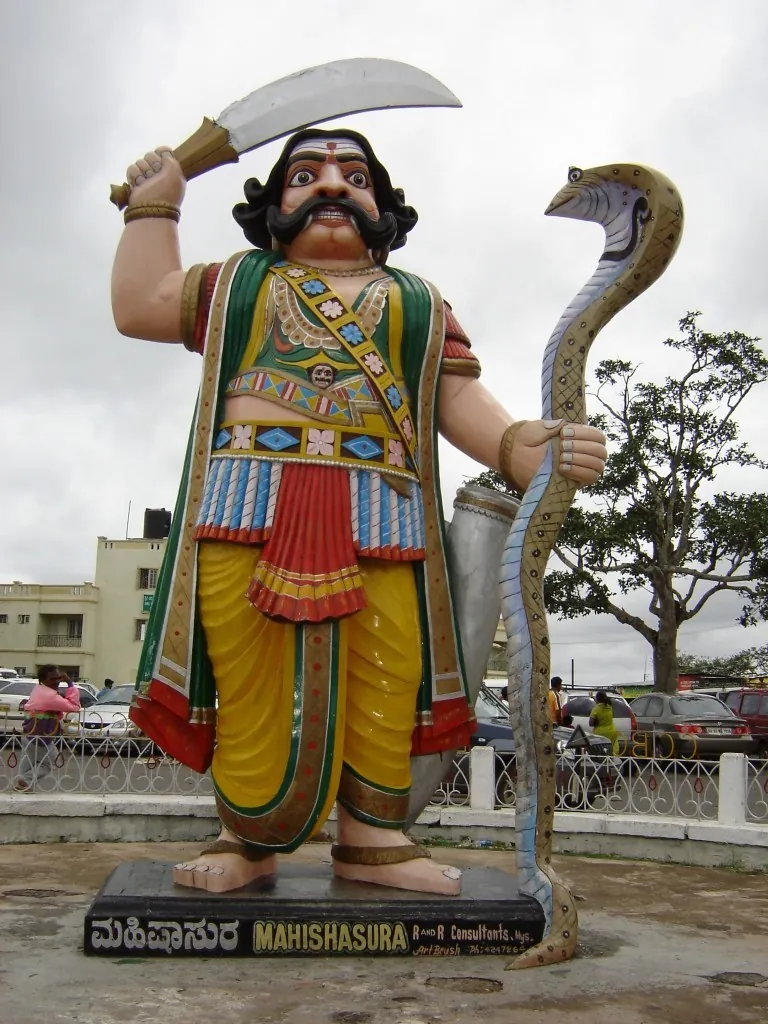
Durgā Slays the Buffalo Demon Mahiṣāsura
Mahiṣāsuramardinī · महिषासुरमर्दिनी
Cosmic placement for a Purāṇic narrative; not historically dated.
In the Devī Māhātmya tradition, the goddess Durgā defeats Mahiṣāsura, a shape-shifting buffalo demon, and is hailed as Mahiṣāsuramardinī, slayer of Mahiṣāsura. The story is celebrated during Navarātri and ends at Vijayadaśamī. It is sacred narrative rather than dated history.
Mahiṣāsura is a buffalo-formed asura of Hindu literature, remembered as deceitful and able to change shape at will. He is described as the son of Rambha and brother of the buffalo-demoness Mahiṣī. In the narrative preserved in the Devī Māhātmya, the goddess Durgā confronts him in battle and kills him with her trident, earning the title Mahiṣāsuramardinī, 'she who crushes Mahiṣāsura'. His son Gajāsura figures in related tales. The conflict is honoured in the festival of Navarātri, the nine nights of worship that conclude on Vijayadaśamī, and it is retold and acted out at many temples in South and Southeast Asia. Within Śāktism the myth is read as the victory of divine feminine power over disorder, and its symbolism has shaped art, dance and drama across the subcontinent. A hymn attributed to Ādi Śaṅkara, the Mahiṣāsuramardinī Stotra, was composed in praise of the goddess for this deed. The date used here is a traditional cosmic placement for a sacred story.
Sources
- Mahishasura Wikipedia · CC-BY-SA-4.0
- Q663318 Wikidata · CC0-1.0